Guide
Best Fountain Pens for Architects and Engineers: Precision Picks
Published: 2026-05-10 · Updated: 2026-05-10
Best Fountain Pens for Architects and Engineers: Precision Picks
A fountain pen for technical work is not the same animal as a fountain pen for journaling. The pens that survive a site visit, a redline session, a field sketch in a damp basement, or a four-hour markup of a structural drawing have a different set of requirements than the ones that win awards for handwriting comfort.
I have spent enough years carrying pens onto job sites and into client meetings to have opinions about which ones come back unbroken and which ones quietly disappear into the field. This guide is for architects, engineers, surveyors, draftsmen, and anyone whose pen has to perform under conditions that a desk-bound writer never has to think about.
What architects and engineers actually need from a pen
The requirements stack differently for technical work. In rough order:
Durability. Pens get dropped onto concrete. Caps get bashed against clipboards. The pen has to survive the building, not the desk.
Fast deployment. A retractable or single-action pen is faster than unscrewing a cap. On a site walk, that matters. Marking up a drawing with one hand while holding a tape measure in the other is a real workflow.
Fine nibs. Technical work demands EF or F. Detail dimensions, callout numbers, and small annotations on dense drawings need a line that does not bloom. Japanese EF and F are the sweet spot for most technical hands.
Waterproof ink compatibility. A pen that cannot handle pigmented or document inks is not useful for field work. Site notes that smear in a sweat-soaked back pocket are worthless.
Clip strength. The pen has to clip to a hard hat strap, a notebook cover, a shirt pocket without slipping. A weak clip ends with a pen on the ground.
Section comfort. Long markup sessions are real. A section that gets slippery with sweat or that has a sharp step at the threads will hurt over an hour of writing.
With those criteria in mind, here are the pens I keep coming back to and recommending.
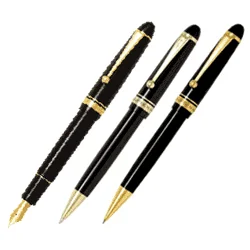
Pilot Vanishing Point — the field king
The Vanishing Point is the only mainstream retractable fountain pen, and that single feature makes it the right answer for anyone who deploys a pen frequently throughout the day. Click the knock at the back, the nib comes out the front, write, click again, the nib retracts and a small trapdoor seals it. No cap to lose. No two-handed uncapping. No drying out between deployments.
The 18k gold nib is small but excellent. EF is a true Japanese EF, fine enough for a 1/16-inch dimension callout. The clip sits at the front of the pen, near the nib, which is unusual but means the pen rides nib-up in a pocket so it cannot leak past the cap seal.
Weight is moderate, balance is grip-section forward, and after a couple of days you stop noticing the unusual clip position.
For a deeper take see Pilot Vanishing Point review 2026.
Best for: site visits, field surveying, anyone whose pen comes in and out of a pocket twenty times a day. Watch out for: the front clip is divisive. Some hands hate it. Try one before buying if possible.
Lamy 2000 — Bauhaus durability for the office side of the job
The Lamy 2000 is the pen for the desk half of technical work. Markup sessions, drawing reviews, long redline meetings. The Makrolon body is fiberglass-reinforced polycarbonate, which means it shrugs off the drops and dings that destroy a lacquered brass pen. The piston filler holds 1.5 ml, more than enough for a full day of dense markup.
The 14k nib is springy enough to be comfortable for an hour of continuous writing, fine enough in EF and F for technical annotation, and the hooded design means the nib is partially protected from desk knocks.
The flush clip clips to a notebook cover and stays there. The whole pen looks like architecture, which is appropriate.
Best for: office markup, long writing sessions, anyone who wants one pen for both technical work and personal correspondence. Watch out for: the nib sweet spot takes a week of practice. Buy from a retailer who tunes nibs.
Pilot Custom 742 with FA nib — for sketching
The Custom 742 with the FA (Falcon Architect, sometimes called Falcon Soft) nib is the specialist pick for architects who sketch. The FA is a soft, flexible nib that produces line variation under pressure — light strokes are fine, weighted strokes broaden noticeably. For perspective sketches, study drawings, and the kind of working sketch that needs a hand-drawn quality, the FA does what no rigid nib can.
It is not the right pen for technical lettering or precise dimensions. But for the sketchbook half of an architect’s life, it is unmatched at the price.
The 14k nib is paired with a robust ebonite feed that keeps up with the ink demand of a flexed stroke. The barrel is resin, balanced, and unobtrusive.
Best for: architects who sketch as part of their thinking process. Watch out for: flex nibs are not for everyone. If you write with heavy pressure normally, the FA will spring sprung quickly. Light hand only.
For more on this category see best fountain pens for drawing.
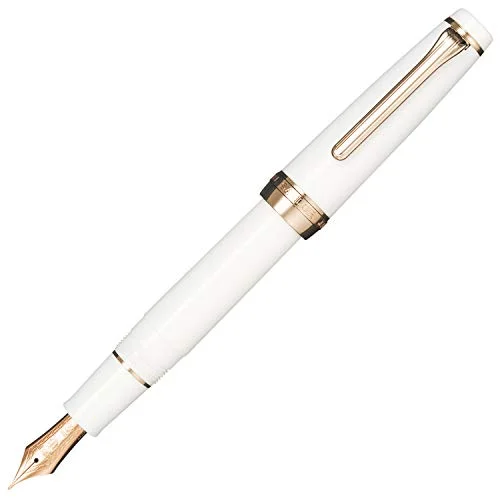
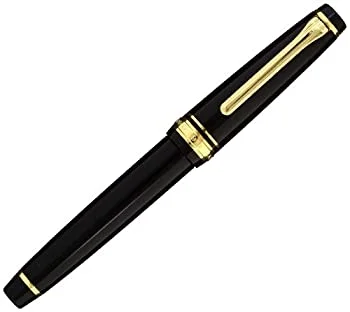
Sailor Pro Gear Slim — the precision EF
The Pro Gear Slim is the pen I recommend to engineers who want the finest possible line without spending Pilot Vanishing Point money. Sailor’s 14k EF is a hairline. On smooth paper it produces a line so fine that you can fit dimension callouts into the smallest grid spacing on a typical engineering pad.
The Pro Gear Slim is genuinely slim, which is the point — it pockets easily, weighs almost nothing, and the section is the right diameter for a pinch grip during precise lettering.
The Sailor “feedback” nib character is a love-or-leave-it thing. It feels like a soft pencil on paper, with audible feedback as you write. Engineers tend to love it. Calligraphers tend not to.
Best for: engineers who want the finest possible technical line. Watch out for: the feedback is real. Test before committing.
TWSBI Eco — the cheap robust beater
The TWSBI Eco is the pen I tell people to start with when they ask what to take to a construction site. Forty USD, demonstrator body so you can see the ink level, a piston filler that holds about 1.7 ml, and a steel nib that is honestly fine for technical work in EF or F.
If it gets lost, it gets lost. If it gets stepped on, you replace it. The Eco is the pen that lets you actually use a fountain pen in conditions where you would not risk a Pilot Vanishing Point or a Lamy 2000.
The acrylic body is more brittle than Makrolon — it will crack under a sharp impact — but at this price, treat it as consumable.
Best for: site work where loss is likely, the second pen, the backup. Watch out for: acrylic cracks. Tighten the piston cap by feel, not by force.
Lamy Safari — the absolute tank
The Safari is the indestructible plastic pen that has been the workhorse of European architecture students for forty years. ABS plastic body, steel nib, simple cartridge or converter filling, a wire clip that will not break. Thirty USD.
The triangular grip section is divisive — some hands love the forced position, others find it cramping. It is also the only thing that distinguishes the Safari from a generic pen in the hand. Try one before buying if you can.
For technical work the EF is a real EF and lays down a clean line on most papers. The cap snaps on with a positive click and the inner cap seals well enough that the pen survives weeks of pocket carry without drying out.
Best for: the absolute beater pen, the student in studio, the second backup. Watch out for: the triangular section. Test before buying.
Pelikan M205 EF — the small precision piston
The M205 is the entry-level Pelikan piston filler, a small pen with a steel EF nib that punches above its price. The piston holds about 1 ml, which is less than a Lamy 2000 but more than most cartridge converters. The build is precise, the clip is firm, and the pen is small enough to disappear in a shirt pocket without drawing attention.
Pelikan steel nibs are surprisingly good — a true EF that lays down a slightly wet, very fine line, and the M205 is one of the few pens at the 130 USD price point that gives you a real piston filler with a serious clip.
Best for: engineers who want a small precision daily driver below the gold-nib threshold. Watch out for: small. If you have large hands, post the cap.
Ink picks for technical work
The pen is half the equation. The ink is the other half. For technical work the standard fountain pen inks are usually the wrong choice because they are water-soluble and most are not lightfast.
Sailor pigment inks (Souboku, Seiboku, Kiwa-Guro) are pigmented, water-resistant once dry, and lightfast. They flow well in fine nibs and they have not clogged any pen I have used them in, provided I clean every six to eight weeks. The blue-black Souboku is my default for site notes.
Platinum Carbon Black is the gold standard for archival, waterproof, fountain-pen-safe black ink. It is a pigmented carbon ink that dries permanent and is bulletproof on most papers. Use it in a pen you are willing to clean — pigment inks need more attention than dye inks.
De Atramentis Document inks are a German line of dye-based inks that are water-resistant once dry. They are gentler on pens than pigment inks and the color range is broader. Document Black is excellent for daily field work.
For more on ink choices for daily writing see best everyday fountain pen inks.
Clip versus strap — how you carry the pen
Two schools of thought.
Clip carry. The pen rides on a shirt pocket, a notebook cover, or a hard-hat strap. Faster to deploy, more vulnerable to drops if the clip slips. Best for pens with strong clips: Vanishing Point, Lamy 2000, Pelikan.
Strap or pouch carry. The pen rides in a leather slip or a single-pen pouch in a bag. Safer, slower, better for pens with delicate finishes or weak clips. Best for the Custom 742, the Sailor Pro Gear, anything you want to protect.
I run a Vanishing Point on the shirt pocket for fast deploy and a Lamy 2000 in a single-pen leather slip in the bag for the long writing sessions. Two pens, two roles.
Comparison table
| Pen | Price (USD) | Best nib for tech | Filling | Body material | Clip strength | Killer feature |
|---|---|---|---|---|---|---|
| Pilot Vanishing Point | ~180 | EF or F (18k) | Cartridge or CON-40 | Brass with lacquer | Strong, front-mounted | Retractable nib |
| Lamy 2000 | ~210 | EF or F (14k) | Piston, 1.5 ml | Makrolon | Strong, flush | Bauhaus durability |
| Pilot Custom 742 FA | ~280 | FA flex (14k) | CON-70 converter | Resin | Moderate | Sketch flex |
| Sailor Pro Gear Slim | ~220 | EF (14k) | Cartridge or converter | Resin | Strong | Hairline EF |
| TWSBI Eco | ~40 | EF (steel) | Piston, 1.7 ml | Acrylic | Moderate | Cheap and replaceable |
| Lamy Safari | ~30 | EF (steel) | Cartridge or Z28 converter | ABS plastic | Wire, very strong | Indestructible |
| Pelikan M205 EF | ~130 | EF (steel) | Piston, 1 ml | Acrylic | Strong | Real piston, small body |
For more on nib sizing across brands see how to choose nib size.
Honest downsides
A guide that pretends every pen is perfect is a guide you should not trust.
The Vanishing Point has a clip that some people genuinely cannot live with. The nib is also smaller than a typical full-size 14k nib and the line variation is minimal. If you want a flexible writing experience, the VP is not it.
The Lamy 2000 has a nib sweet spot that takes a week of practice to find naturally. New owners often think the pen is broken when they actually need to adjust how they hold it.
The Custom 742 FA is a flex nib and that means you can sprung the tines if you write heavy. If you have not used a flex nib before, start with a steel-nib practice pen first.
The Pro Gear Slim feedback is real. Some hands love the pencil-on-paper character, others find it unpleasant.
The Eco is acrylic and acrylic cracks under sharp impact. It is robust against scratches but not against a 1.5-meter drop onto rebar.
The Safari triangular grip forces a tripod position that not every hand likes. Try before you commit.
My personal carry
For the record. Vanishing Point F with Sailor Souboku in the shirt pocket. Lamy 2000 EF with Platinum Carbon Black in a single-pen leather slip in the bag. A TWSBI Eco F with Diamine Earl Grey in the office drawer as the fallback. That is the rotation that has survived three years of meetings, site visits, and the occasional rainstorm.
For travel-specific pens that double as field tools see best travel fountain pens. For longhand-friendly options when the work shifts to long-form notes see best fountain pens for note-taking.
FAQ
1. Are fountain pens actually practical for site work? With the right ink, yes. A pigmented or document ink in a sealed-cap pen is more reliable than a cheap rollerball that dries up between uses.
2. What about pencil for site work? Pencil is the right answer for drafting on trace and for anything that needs to be erased. Pen is the right answer for permanent annotation and signatures. They are different tools.
3. Will my pen survive being clipped to a hard hat? The Vanishing Point and Lamy 2000 will. The Safari will. Lacquered brass pens with weak clips will not.
4. What is the finest line I can get from a fountain pen? A Sailor or Pilot EF with a hairline grind from a nibmeister will get you to about 0.2 mm. A standard Sailor EF is around 0.3 to 0.35 mm.
5. Do I need waterproof ink? For field notes, signatures, and anything that has to survive sweat or rain, yes. For desk work, no.
6. Can I refill ink at the office? A bottle of ink in a desk drawer plus a piston filler or converter pen is faster than running out and buying cartridges. Bottles also work out cheaper per ml.
7. What about disposable fountain pens like the Pilot V-Pen? Fine for an emergency or a one-time-use scenario. Not a long-term answer for a daily technical workflow.
8. Can I use a fountain pen for blueprints and tracing paper? Tracing paper is generally hostile to fountain pens because it does not absorb ink well. Smooth blueprint paper is better. Mylar is hopeless. Test before committing your favorite ink.
Final word
The right pen for technical work is the one that survives your week, not the one that wins the hand-feel contest in a stationery store. Drops, ink splatter, sweaty grips, and the slow accumulation of small dings are the real test. The five pens I keep coming back to — Vanishing Point, Lamy 2000, Custom 742 FA, Pro Gear Slim, TWSBI Eco — have all earned their place by surviving conditions a desk pen never sees. Pick the one that matches your role on a given day, pair it with a real waterproof ink, and the pen will outlast the project.
🖊️ Featured Pens in This Article