Pen Review
Best Fountain Pens Under $50: A Complete Guide for Every Budget
Published: 2026-04-08 · Updated: 2026-04-08
There has never been a better time to get into fountain pens on a budget. The sub-$50 market in 2026 is packed with pens that would have embarrassed their $100+ counterparts from ten years ago. Improved manufacturing from both established brands and newcomers has created fierce competition, and the winner is you — the buyer.
We have spent months testing every major budget fountain pen we could find, writing hundreds of pages with each, swapping nibs, trying different inks, and pushing these pens through daily use. This guide covers every pen worth considering under $50, with honest assessments of their strengths and weaknesses.
How We Tested
Every pen in this guide was evaluated over a minimum of two weeks of daily writing. We tested each one with at least three different inks, on both premium and cheap office paper. We assessed nib smoothness out of the box, ink flow consistency, cap seal effectiveness, build quality, and overall writing comfort during extended sessions. No pen got a pass based on reputation alone — everything had to earn its spot.
Tier 1: Under $10 — Shockingly Good for the Price
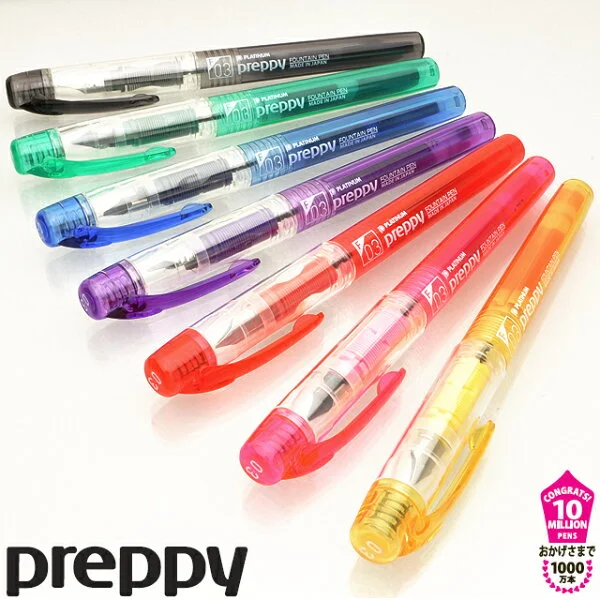
Platinum Preppy ($4-5)
The Platinum Preppy is the most remarkable value in all of fountain pens. At under five dollars, you get a pen with Platinum’s patented Slip and Seal cap mechanism, which prevents ink from drying out for up to two years. That is the same technology found in Platinum’s Century 3776, a pen that costs thirty times more.
The stainless steel nib is small but well-tuned. It writes with a slight feedback that many find pleasant — not scratchy, but you can feel the paper. The clear demonstrator body lets you see your ink level at all times. The snap cap is secure and satisfying.
Where it excels: The Slip and Seal cap makes this the best pen for infrequent writers. If you only pick up your pen once a week, the Preppy will start writing immediately every time. No hard starts, no dried-out nibs.
Where it falls short: The plastic body feels exactly like what it costs. It is light to the point of feeling insubstantial for some writers, and the clip will snap if you look at it wrong. The 03 Fine nib can run a bit dry with thicker inks.
Best nib choice: The 05 Medium strikes the best balance between smoothness and line width.
Our verdict: Every fountain pen user should own a Preppy. It is the perfect travel pen, backup pen, or gateway pen for curious friends.
Pilot Kakuno ($10-12)
If the Preppy is the value king, the Kakuno is the charm offensive. Pilot designed this pen for schoolchildren in Japan, and it shows in the best possible way. The triangular grip section guides your fingers into the correct position naturally. A tiny smiley face on the nib greets you every time you uncap — a small touch that never stops being endearing.
But do not let the playful design fool you. Underneath the cheerful exterior is a genuinely excellent writer. The Kakuno uses the same nib unit as the Pilot Metropolitan, which means you get Pilot’s famously smooth steel nibs at a fraction of the price. The snap cap has a satisfying click and seals well enough to prevent drying for a couple of weeks.
Where it excels: Nib quality punches far above its price. The triangular grip is genuinely helpful for new writers developing proper pen hold habits. Available in a wide range of body colors and limited editions.
Where it falls short: The cap does not post securely on the back of the pen, which can be annoying for those who prefer a posted pen. The plastic body, while more substantial than the Preppy, still feels budget. No converter is included — you will need to buy one separately or use cartridges.
Best nib choice: The M nib is buttery smooth. If you want something finer, Pilot’s F nib is the best fine nib in this entire price range.
Our verdict: The best nib under $15, period. If smooth writing is your priority and you do not care about premium build quality, the Kakuno is hard to beat.
Jinhao Shark ($3-4)
We need to mention the Jinhao Shark because it has become something of a phenomenon in the fountain pen community. Shaped like a cartoonish shark, it costs less than a fancy coffee and writes surprisingly well for what it is. The nib is hit or miss — some write perfectly out of the box while others need minor adjustment. But at this price, you can buy five and still spend less than a single Kakuno.
Our verdict: A fun novelty that actually works as a pen. Great as gifts for kids or for people who want to try fountain pens with virtually zero financial risk.
Tier 2: $15-25 — The Sweet Spot
This is where things get interesting. At this price point, you start getting metal bodies, better fit and finish, and nibs that require no compromise.
Pilot Metropolitan ($18-22)
The Pilot Metropolitan has been the default recommendation for beginner fountain pens for over a decade, and it still deserves that spot. The brass body with a lacquered or patterned finish gives it a weight and presence that feels like a much more expensive pen. Pick up a Metropolitan and a $100 pen blindfolded, and you might struggle to tell them apart by feel alone.
The nib is the same unit found in the Kakuno, which means excellent Pilot steel nib quality. The Metropolitan adds a squeeze converter in the box, so you can start using bottled ink right away without buying anything extra. The snap cap seals well, and the overall build quality is outstanding for the price.
Where it excels: Build quality is the best in this price tier, full stop. The weight and balance feel premium. The included converter adds immediate value. It looks professional enough for any workplace.
Where it falls short: The squeeze converter holds very little ink and can be fiddly to use. Many users immediately upgrade to a CON-40 or CON-70 converter. The Metropolitan is only available in F and M nibs — no italic, stub, or extra fine options. The lacquer on some finishes can chip after extended use.
Best nib choice: The Fine nib is incredibly smooth for a western F. It runs closer to a Japanese medium in actual line width.
Our verdict: Still the king of the $20 price point. If you want one pen that does everything well and looks good doing it, this is the one.
LAMY Safari ($25)
The LAMY Safari is the most divisive pen on this list. People either love it or hate it, and the reason is the same feature: the triangular grip section. Unlike the subtle guidance of the Kakuno, the Safari’s grip has hard, molded facets that force your fingers into LAMY’s idea of the correct position. If your natural grip aligns with LAMY’s design, the Safari is incredibly comfortable. If it does not, every writing session becomes a minor argument with your pen.
That said, the Safari’s overall package is compelling. The ABS plastic body is virtually indestructible — this is a pen you can throw in a backpack without a second thought. The wire clip is springy and functional. The snap cap is secure. And LAMY’s nib swapping system means you can switch between Extra Fine, Fine, Medium, Broad, and even italic nibs with no tools required, just pull one off and push another on.
Where it excels: Durability is unmatched. The nib swap system is brilliant for people who want to experiment with different line widths without buying multiple pens. Massive range of colors and limited editions makes it collectible. It is an icon of industrial design.
Where it falls short: Nib quality control has been inconsistent. Some Safari nibs are perfect out of the box while others are scratchy or misaligned. The proprietary cartridge and converter system means you cannot use standard international cartridges. The grip section is a love-or-hate feature with no middle ground.
Best nib choice: The Medium nib is the most consistent in quality. If you want fine lines, we actually recommend buying a separate EF nib and swapping it — the F nibs can be hit or miss.
Our verdict: The best pen for abuse tolerance and nib experimentation, but check the nib before committing to it.
Hongdian Forest Series ($15-20)
The Chinese fountain pen market has matured significantly, and the Hongdian Forest series represents the best of what it offers. The pen features a metal body with beautifully etched nature-inspired patterns — birds, trees, and landscapes that wrap around the barrel. It looks like a pen that costs three times its price.
The EF nib is the star of the show for many users. Hongdian’s extra fine nibs are genuinely fine — finer than most Japanese fine nibs — making this an excellent pen for small handwriting or detailed work. The screw cap provides an excellent seal, and the overall fit and finish are impressive.
Where it excels: Visual design is stunning for the price. The EF nib is one of the finest available without going to specialty grinds. The metal body has a satisfying weight. The screw cap provides excellent ink preservation.
Where it falls short: The nib can be a bit scratchy, especially in the EF size — this is the trade-off for an extra fine line. The converter that comes included is small and can be finicky. Customer service can be challenging due to the overseas manufacturer.
Best nib choice: The EF if you want truly fine lines, the F for a smoother daily writing experience.
Our verdict: The best-looking pen under $20 and a genuinely impressive writer. A strong alternative to the Metropolitan if you want something with more visual character.
Tier 3: $25-50 — Entry-Level Enthusiast
At this price point, pens stop being “good for the price” and start being simply good. These are pens that enthusiasts with collections worth thousands still reach for regularly.
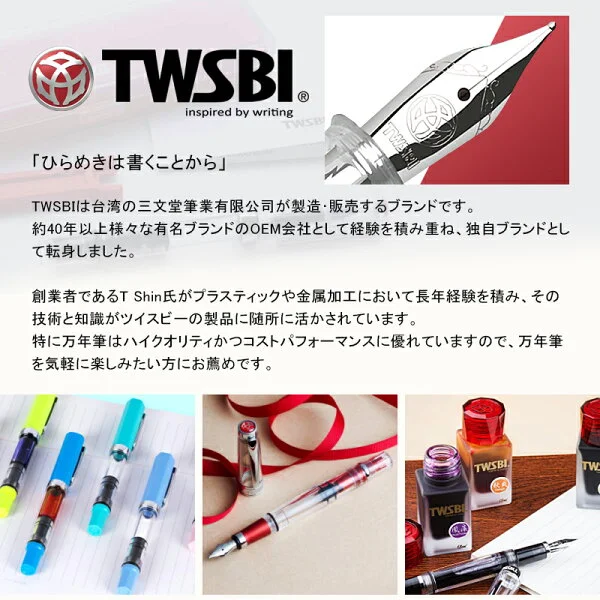
TWSBI Eco ($35-40)
The TWSBI Eco changed the budget fountain pen market when it launched, and it remains one of the most important pens in the hobby. It brought a high-quality piston filling system — previously found only in pens costing $100 or more — down to a price that beginners could afford.
The piston filler holds a massive amount of ink compared to cartridge/converter pens. The clear demonstrator body lets you watch the piston work and see exactly how much ink you have left. The nib options span from Extra Fine to Broad, plus a 1.1mm stub that is one of the best entry points into italic writing.
The writing experience is excellent. TWSBI’s steel nibs are made by JoWo, one of the best nib manufacturers in Germany, and they are well-tuned out of the box. The nib is smooth with just enough feedback to know you are writing on paper.
Where it excels: Ink capacity is unmatched at this price. The piston mechanism is smooth and satisfying to use. The demonstrator body is endlessly entertaining with different colored inks. Build quality is excellent for the price.
Where it falls short: The Eco has had historical issues with cracking near the cap threads and where the piston knob meets the barrel. TWSBI has improved this over the years and offers excellent warranty service, but it remains a concern. The pen is also fairly large, which may not suit users with smaller hands.
Best nib choice: The Medium is a crowd-pleaser. The 1.1mm Stub is spectacular for anyone interested in adding character to their writing.
Our verdict: The best overall fountain pen under $50 for enthusiasts. The piston filler, ink capacity, and nib quality make it genuinely hard to beat.
Faber-Castell Hexo ($35-45)
Faber-Castell brings 260 years of writing instrument expertise to the Hexo, and it shows. The hexagonal barrel is a nod to the classic pencil shape, giving it a distinctive look that stands out from the sea of cylindrical pens. The matte finish feels excellent in hand, and the overall build quality is unmistakably German.
But the real story is the nib. Faber-Castell’s steel nibs are consistently among the best in the industry, and the Hexo’s nib is no exception. It writes smooth and wet out of the box, with the kind of reliability you expect from a pen costing twice as much. The cartridge/converter system uses standard international cartridges, giving you the widest range of cartridge options available.
Where it excels: Nib quality is arguably the best under $50. The unique hexagonal design is eye-catching and practical — it will not roll off your desk. Build quality and finish are premium. Standard international cartridges are convenient.
Where it falls short: Only available in Fine and Medium nibs. The hexagonal shape, like the LAMY Safari’s grip, is a love-or-hate feature. The pen is on the heavier side, which can cause fatigue during long writing sessions.
Best nib choice: The Medium nib is exceptionally smooth and consistent.
Our verdict: The most refined writing experience under $50. If writing quality is your top priority and you do not need a broad range of nib options, the Hexo delivers.
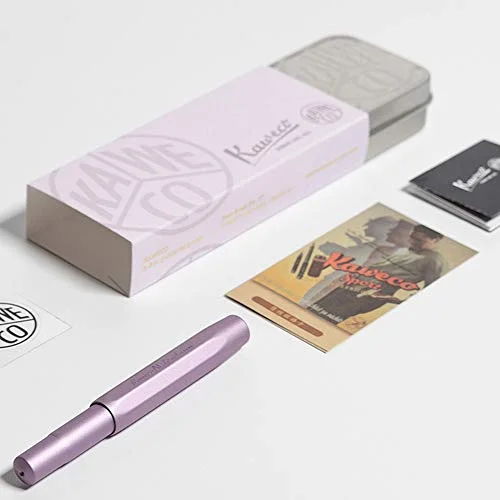
Kaweco Sport ($28-35)
The Kaweco Sport is the pocket fountain pen. Capped, it is barely longer than a credit card is wide. Posted — with the cap on the back — it extends to a comfortable full-size writing instrument. This dual personality has made it a favorite of writers, sketchers, and anyone who wants a fountain pen that is always with them.
The design has not fundamentally changed since 1935, and that is part of its charm. The octagonal barrel, the faceted cap, the snap closure — it all feels intentional and considered. Kaweco offers it in a dizzying array of colors and materials, from the standard plastic Sport to aluminum, brass, and even stainless steel versions, though those exceed our $50 budget.
Where it excels: Portability is unmatched. The compact size makes it the pen most likely to actually be in your pocket when you need it. The design is timeless and attractive. The wide range of colors and limited editions makes collecting irresistible.
Where it falls short: Nib quality can be inconsistent — Kaweco’s QC has been a recurring complaint in the community. The small barrel means small ink capacity, especially with cartridges. No converter is available for the standard Sport size, though you can use a mini converter or syringe-fill cartridges. The grip section is short, which may not suit all hand sizes.
Best nib choice: The Medium nib is the safest bet for consistent quality. The Fine can be hit or miss.
Our verdict: The best pocket pen at any price. Accept its quirks and you will be rewarded with a pen that goes everywhere with you.
Nib Quality Comparison
Since the nib is the most important part of any fountain pen, here is how our tested pens compare across key metrics. We rated each on a scale of 1 to 5 based on our testing.
Smoothness (out of the box)
The smoothest nibs in our testing came from Pilot and Faber-Castell. The Pilot Metropolitan and Kakuno share the same nib unit, and both are phenomenally smooth for their price. The Faber-Castell Hexo is equally smooth but with a different character — wetter and with more cushion.
The TWSBI Eco’s JoWo nib is a close third, offering good smoothness with a pleasant hint of feedback. The LAMY Safari and Kaweco Sport bring up the rear, with more variability between individual nibs.
Consistency (quality control)
Pilot and Faber-Castell lead the pack again. In our testing, every single Pilot and Faber-Castell nib was well-tuned out of the box. TWSBI was close behind with only occasional minor issues.
LAMY and Kaweco showed the most inconsistency. While their best nibs are excellent, there is a real chance of getting one that needs adjustment. If you are a beginner without nib tuning skills, factor this into your decision.
Line Variation
None of these pens are flex pens, but some show more natural line variation than others. The TWSBI Eco’s 1.1mm Stub is the standout here, offering dramatic thick-thin variation with minimal pressure. Among the regular nibs, Pilot’s nibs tend to be the most rigid, producing very consistent lines, while LAMY and TWSBI nibs show slightly more natural variation.
Ink Compatibility
All of the pens in this guide work well with the vast majority of inks, but some pairings are worth noting.
Wet Inks
The Pilot Metropolitan and Faber-Castell Hexo handle wet inks like Iroshizuku and Pelikan Edelstein beautifully, producing rich, saturated lines. The LAMY Safari with its broader nibs also pairs well with wet inks.
Dry Inks
If you tend to use drier inks like Sailor or Platinum formulations, the Pilot Kakuno and TWSBI Eco handle them best, keeping ink flowing consistently without skipping.
Shimmer and Sheening Inks
For shimmer inks, use a Medium or broader nib — Extra Fine nibs will clog. The TWSBI Eco and LAMY Safari are the best choices for shimmer inks because they are easiest to disassemble and clean thoroughly. Avoid using shimmer inks in the Pilot Metropolitan or Kaweco Sport, as their converter systems make complete cleaning difficult.
Our Recommendations by Use Case
Best for absolute beginners
Pilot Metropolitan. The build quality, included converter, professional appearance, and consistent nib quality make it the safest first purchase.
Best for students
LAMY Safari. The durability is unmatched. You can throw it in a backpack, drop it, lend it to classmates, and it will keep working. The nib swap system lets you experiment as your preferences develop.
Best for writers and journalers
TWSBI Eco. The massive ink capacity means fewer refills during long writing sessions. The 1.1mm Stub nib adds beauty to everyday handwriting without requiring any special skill.
Best for sketchers and artists
Platinum Preppy (03 Fine) or Hongdian Forest (EF). Fine lines, affordable enough to dedicate to art use, and easy to clean when switching between ink colors.
Best pocket pen
Kaweco Sport. Nothing else comes close for true pocket portability.
Best for trying fountain pens with zero commitment
Platinum Preppy. At under five dollars, it costs less than most lattes. If you hate it, you have lost nothing. If you love it, you have found a new hobby.
Final Thoughts
The best fountain pen under $50 is the one that makes you want to write. Every pen in this guide has something special to offer, and none of them will leave you feeling like you compromised. The gap between budget and premium fountain pens has never been smaller, and for many writers, these affordable pens are all they will ever need.
Start with one pen from this list. Use it for a month. Pay attention to what you love and what you wish were different. That will guide your next purchase better than any review ever could.
Welcome to the hobby. Your wallet may never recover, but your handwriting will thank you.
🖊️ Featured Pens in This Article