Comparison
Fountain Pen Refills: Cartridge vs Converter vs Bottled Ink
Published: 2026-04-29 · Updated: 2026-04-29
When I refilled my first fountain pen, I had no idea there were three completely different ways to do it. The pen came with a couple of plastic cartridges, but the box also mentioned a “converter” sold separately, and the fountain pen forums I lurked on kept talking about bottled ink. Years later, I have refilled pens with all three methods, and I can tell you that the choice is not just about preference — it affects cost, ink selection, travel safety, and even how often you have to clean your pen.
This guide breaks down cartridges, converters, and bottled ink so you can pick the right system for the way you actually write.
The Three Refill Methods at a Glance
Before we dig into details, here is a quick comparison of the three options.
| Method | Cost per fill | Ink capacity | Color selection | Mess factor | Best for |
|---|---|---|---|---|---|
| Cartridge | $0.30 to $2 | 0.7 to 1.4 ml | Limited (5 to 30 colors) | Zero | Travel, students, beginners |
| Converter | About $0.10 (with bottle) | 0.5 to 1.0 ml | Unlimited | Low | Daily writers wanting variety |
| Bottled ink (direct) | About $0.05 (with bottle) | 1.2 to 2.0 ml | Unlimited | Medium | Enthusiasts, home use |
Now let’s look at each in depth.
Cartridges: The Easy Way
A cartridge is a small sealed plastic tube pre-filled with ink. You push it into the back of the pen section, the inner pin pierces the seal, and ink starts flowing. That is the entire process — no bottles, no syringes, no paper towels.
Why I Reach for Cartridges
I keep a stash of cartridges in my travel kit and at the office for one simple reason: they are foolproof. There is no way to spill, no risk of getting ink on my fingers, and no cleanup. When I am running between meetings and notice my pen has gone dry, I can swap a cartridge in 10 seconds without leaving my desk.
For students, cartridges make even more sense. A young writer using a LAMY Safari does not want to deal with a bottle of ink in a backpack alongside textbooks and a laptop.
The Limitations Are Real
Cartridges are convenient, but you pay for that convenience in three ways.
Color selection is narrow. Pilot offers around six cartridge colors. LAMY offers eight. Sailor and Platinum each cap out around five or six. Compare that to the hundreds of bottled colors available from the same brands, plus the entire universe of third-party ink makers.
Cost per milliliter is high. A typical cartridge holds about 1 ml of ink and costs $0.30 to $2 depending on brand. A 30 ml bottle of premium ink costs $20 to $30 and gives you 100+ refills at a fraction of the cost per milliliter.
You generate plastic waste. Every cartridge is a single-use plastic capsule. If you write daily and go through three cartridges a week, that is 150+ small pieces of plastic per year going to landfill.
International Standard vs Proprietary Cartridges
This is where things get confusing for new fountain pen users. Not all cartridges fit all pens.
The International Standard (sometimes called Standard International or just “international short/long”) is a generic cartridge format used by most European and many smaller brands. Pens that take this standard can use cartridges from Pelikan, Diamine, Monteverde, J. Herbin, Kaweco, Faber-Castell, and dozens of others — mix and match freely.
Proprietary cartridges are designed to fit only one brand’s pens. The big proprietary players are:
- Pilot — uses its own IC-100 cartridge, available in six colors
- LAMY — uses the T10 cartridge, available in eight colors (cannot be used with non-LAMY pens)
- Cross — uses a proprietary cartridge that fits only Cross pens
- Pelikan — uses International Standard, but the brand’s own cartridges are widely available
- Sailor — uses its own cartridge format with about six colors
- Platinum — uses its own cartridge format, also fits Platinum’s own bottled ink converters
If you buy a Pilot Metropolitan and try to load a Pelikan cartridge, it will not fit. Always check which cartridge format your pen accepts before stocking up.
Best Pens If You Want to Stay on Cartridges
- LAMY Safari ($30) — eight colors of T10 cartridges, easy to find
- Pilot Kakuno ($18) — friendly student pen, IC-100 cartridges
- Kaweco Sport ($28) — pocket-sized, takes International Standard
Converters: The Compromise
A converter is a small reusable mechanism that fits into the same slot as a cartridge but lets you draw ink from a bottle. Think of it as a refillable cartridge.
Most converters work by twisting a knob (piston-style) or pressing a metal squeezer (squeeze-style). You dip the nib into a bottle of ink, draw the ink up into the converter, wipe the nib, and you are ready to write. The whole process takes about 30 seconds.
Why I Use Converters Most Days
The converter is the bridge between convenience and freedom. With one purchase (typically $5 to $25), you unlock the entire bottled-ink world while keeping your existing pen. I run nearly all my daily-driver pens on converters because I want access to specific colors — Pilot Iroshizuku Tsuki-yo, Sailor Ink Studio 162, Diamine Oxblood — that simply do not exist as cartridges.
For a deeper look at all the filling systems pens come with, see my filling systems guide.
The Compromise
Converters are not perfect. They hold less ink than dedicated piston fillers, typically 0.5 to 0.8 ml versus 1.2 to 1.8 ml in a piston pen. If you write extensively, a converter pen might need refilling every few days while a piston pen lasts a week or more.
The other downside is mess. Filling a converter requires dipping the nib into the bottle, which means ink on the section. You will need a paper towel or microfiber cloth nearby every time you refill. After a year of regular filling, even careful users end up with faintly stained fingers occasionally.
Quality also varies. Pilot’s CON-70 (push-button mechanism, 1.0 ml capacity) is one of the best converters on the market. The standard squeeze converters that come with cheaper pens often hold less ink and feel flimsy.
Compatibility Notes
Converters are generally proprietary to the brand. A Pilot CON-40 fits Pilot pens. A LAMY Z28 fits LAMY pens. A Pelikan converter fits Pelikan pens. There is no universal converter — always buy the one made for your pen.
The exception: pens that accept International Standard cartridges can usually accept International Standard converters too. This is what gives Kaweco, Faber-Castell, and similar pens flexibility.
Best Converter Pens
- Pilot Custom 74 ($160) — gold nib, takes the excellent CON-70 converter
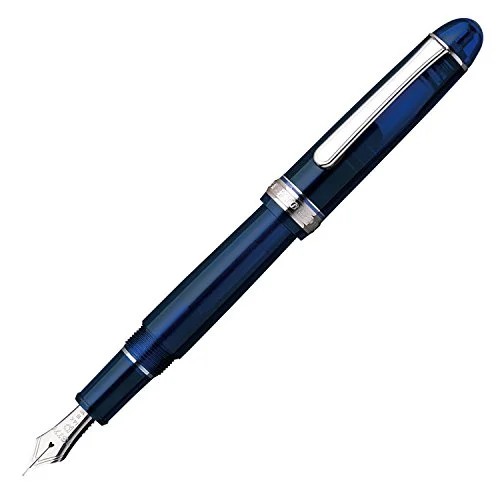
- Platinum #3776 Century ($90) — Slip and Seal cap pairs beautifully with the bottled-ink workflow
- TWSBI Swipe ($30) — comes with both a converter and an oversized cartridge
Bottled Ink (Direct Fill): The Connoisseur’s Choice
Some pens skip the cartridge-and-converter system entirely and fill directly from a bottle. This includes piston fillers, vacuum fillers, eyedropper-converted pens, and historic systems like lever-fillers or button-fillers found on vintage pens.
Why Enthusiasts Love Bottled Ink
Three reasons.
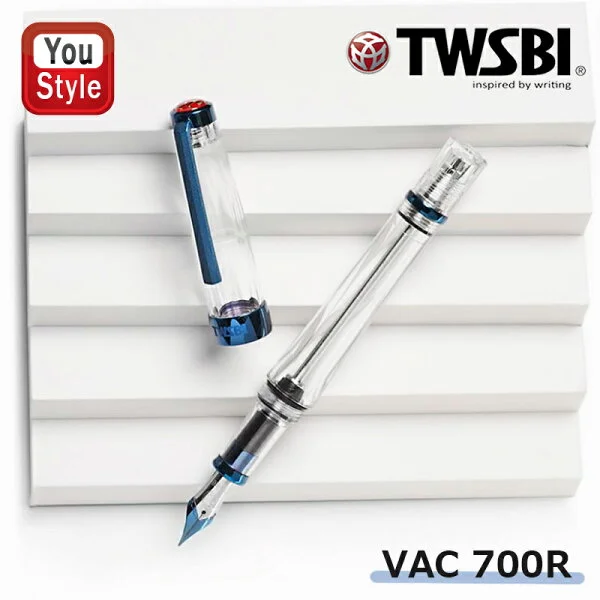
Capacity. A piston-filled pen like the Pelikan M800 holds 1.6 ml of ink. The TWSBI Vac700R holds an absurd 2.0 ml. These are pens you can write with all day without refilling.
Cost per page. Once you own the bottle, ink becomes essentially free. A 30 ml bottle of Pilot Iroshizuku ($28) gives you about 30 fills of a typical converter, or about 18 fills of a piston pen. Either way, you are spending pennies per refill.
Ink selection. This is the biggest reason. The fountain pen ink world has exploded over the past decade. Brands like Sailor, Diamine, Pilot Iroshizuku, Pelikan Edelstein, Robert Oster, and many others offer hundreds of unique colors with properties like sheen, shading, shimmer, and chromatic shifting. None of this exists in cartridge form. For more on the colors worth trying, see my best fountain pen inks roundup and the 2026 ink trends report.
The Honest Downsides
Bottled ink is not glamorous when you are filling a pen on a hotel room desk. Mess is real. Drying time is real. Storage is real — a shelf of 20 ink bottles takes up actual space.
Bottled ink also requires more frequent cleaning. Because you are using diverse inks (some pigmented, some saturated, some with sheen particles), you need to flush the pen between colors to avoid muddy results. See my cleaning guide for the routine I follow.
Eyedropper Conversion
A clever middle path: some cartridge/converter pens can be converted into eyedropper fillers. You remove the converter, seal the threads with silicone grease, and fill the entire barrel directly with ink using a syringe.
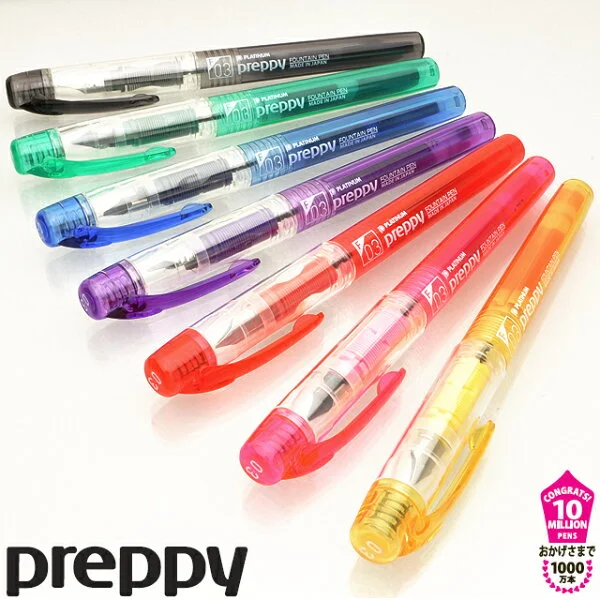
Pens that can be eyedropper-converted include the Kaweco Sport, Platinum Preppy, Opus 88 (designed as eyedropper from the factory), and most TWSBI Go-style pens. The result is enormous capacity — the Platinum Preppy holds about 2.5 ml as an eyedropper versus 1 ml on a cartridge.
The risk: if the seal fails, you have a pen full of ink leaking onto your shirt. I only eyedropper pens I plan to use at home.
The Cost Math: Cartridges vs Bottled Ink
Let me run actual numbers for a daily writer.
Cartridge user, three cartridges per week, 156 cartridges per year. At $1 each (typical name-brand pricing), that is $156 per year. Plus 156 plastic capsules in the trash.
Bottled ink user, equivalent ink volume (about 156 ml per year). One 30 ml bottle of premium ink at $25 yields about 100 cartridge-equivalents. So roughly five bottles per year = $125 per year, with the side benefit of access to 200+ unique colors and zero plastic cartridge waste.
For a moderate writer (one cartridge a week), the gap narrows: $52 per year on cartridges versus about $40 on bottled ink. Not huge.
The cost argument really kicks in for heavy writers and ink enthusiasts. If you go through ink like I do, bottled is dramatically cheaper per page.
Travel: When the Choice Really Matters
This is where I have changed my mind over the years.
Flights. Cabin pressure changes can force air bubbles in your pen, which sometimes results in ink leaks. Cartridges are the safest option for flying because the cartridge seal is robust. Many travelers (myself included) carry pens completely empty for flights and only insert a fresh cartridge after landing.
If you must fly with a filled pen, fill it completely full (no air gap is the key) and store it nib-up. A pen that is two-thirds full is more likely to leak than a pen that is full to the brim.
For more on travel-friendly setups, see my travel fountain pens guide.
Hotels and offices. Cartridges win here too. You can swap one in 10 seconds without spreading ink on hotel furniture or office desks. I always pack a few spares in my pen case.
Long road trips or multi-week travel. Counterintuitively, a piston filler can be excellent for extended travel because it holds so much ink that you do not need to refill at all. Fill it before leaving and it will last your trip.
What I Actually Do
For full transparency: I run a hybrid system.
- Daily-driver pen at home: Pelikan M400, piston filler, bottled Iroshizuku Kon-peki
- Office pen: Pilot Custom 74 with CON-70 converter, bottled Sailor 161
- Travel pen: LAMY Safari with T10 cartridges, blue-black for predictability
- Pocket pen for errands: Kaweco Sport with cartridges
Three different refill systems for four different contexts. None of them is wrong — they are tools for different jobs. Pick the system that matches the way you write, and do not feel bad about using cartridges if that is what works.
If you are still picking your first pen, my beginner buying guide and best pens under $100 cover models that work well across all three systems.
FAQ
What is the difference between a cartridge and a converter?
A cartridge is a sealed disposable plastic tube of pre-filled ink that you snap into the pen and discard when empty. A converter is a small reusable mechanism that fits into the same slot but lets you fill from a bottle of ink, giving you access to far more colors at a lower cost per milliliter.
How long does a fountain pen cartridge last?
A typical international standard cartridge contains about 1 ml of ink, which produces roughly 8 to 10 pages of A5 writing depending on nib width. A medium nib will use ink faster than an extra-fine. Heavy daily writers go through one cartridge in two to three days.
Are all fountain pen cartridges the same size?
No. There are two main systems: International Standard (used by most European and small brands like Pelikan, Kaweco, and Diamine) and proprietary cartridges (used by Pilot, LAMY, Sailor, Platinum, and Cross, each of which has its own unique shape). Always check what your pen accepts before buying refills.
Can I refill a fountain pen cartridge?
Technically yes, using a syringe to inject bottled ink into an empty cartridge. However, this is messier and slower than using a converter, and some cartridge plastics are not designed for repeated use. If you want to use bottled ink, buy a converter — it is built for the job.
Is bottled ink better than cartridges?
Better depends on what you value. Bottled ink offers far more colors, lower cost per milliliter, and access to premium inks with sheen and shading properties. Cartridges offer convenience, zero mess, and reliable performance for travel. Many fountain pen users (myself included) use both depending on the context.
How much ink does a converter hold compared to a cartridge?
A standard converter holds about 0.5 to 0.8 ml of ink. A standard cartridge holds about 1 ml. Pilot’s larger CON-70 converter is an exception, holding nearly 1 ml. Piston fillers and vacuum fillers hold significantly more — often 1.5 to 2 ml.
Can I use any bottled ink with my fountain pen?
Use ink specifically labeled for fountain pens. India ink, calligraphy ink, and drawing ink contain pigments or shellac that will permanently clog your pen. Stick with established fountain pen ink brands like Pilot Iroshizuku, Sailor, Pelikan Edelstein, Diamine, or Waterman for safe, well-behaved performance.
What is an eyedropper conversion and is it safe?
Eyedropper conversion turns a cartridge/converter pen into a direct-fill pen by sealing the section threads with silicone grease and filling the barrel itself with ink. It dramatically increases capacity (typically 2 to 3 ml) but introduces leak risk if the seal fails. I recommend it only for pens you use at home, and only with pens specifically known to convert cleanly (Kaweco Sport, Platinum Preppy, Opus 88).
🖊️ Featured Pens in This Article