Guide
Why Gen Z Is Ditching Screens for Fountain Pens: The Analog Writing Revival
Published: 2026-04-09 · Updated: 2026-04-10
Something unexpected is happening. The generation that grew up with smartphones glued to their hands is now falling in love with one of the oldest writing technologies on the planet. Fountain pens — those elegant, ink-filled instruments your grandparents might have used — are experiencing a massive revival among Gen Z writers, students, and creatives. And it all started, ironically enough, on a screen.
The TikTok Effect
The #fountainpen hashtag on TikTok has amassed billions of views, and the numbers keep climbing. Scroll through the tag and you will find mesmerizing ink swatches, satisfying writing ASMR, pen unboxings, and journaling tutorials. Creators like @penandinkdaily and @journalwithme have built massive followings by sharing the simple pleasure of putting ink to paper.
What makes fountain pen content so compelling on a visual platform? It is deeply satisfying to watch. The way ink flows from a nib, the shimmer of a sheening ink catching the light, the rhythmic scratch of steel on paper — these are sensory experiences that translate surprisingly well to short-form video. A 30-second clip of someone writing with a turquoise ink in a Hobonichi planner can stop a scrolling thumb faster than most content.
But it goes deeper than aesthetics. The fountain pen community on TikTok is remarkably welcoming. Unlike some hobby spaces that gatekeep with jargon and snobbery, pen enthusiasts celebrate beginners. A $5 Platinum Preppy gets the same love as a $500 Sailor Pro Gear. This inclusivity has lowered the barrier to entry and made an old-world hobby feel accessible to a generation that values authenticity over status.
Why Analog in a Digital World
Gen Z is the most digitally connected generation in history — and many of them are exhausted by it. The average young adult spends over seven hours a day on screens. Notifications never stop. Every app is engineered to hijack attention. In this context, picking up a fountain pen is not just a hobby. It is an act of quiet rebellion.
Digital detox, one page at a time. Writing with a fountain pen demands your full attention. You cannot multitask. You cannot copy-paste. You have to slow down, form each letter, and engage with your thoughts in a way that typing simply does not require. For a generation dealing with unprecedented rates of anxiety and attention fragmentation, this enforced slowness is not a bug — it is the entire point.
Mindfulness through writing. The ritual of filling a pen with ink, choosing a notebook, and sitting down to write creates a meditative anchor in an otherwise chaotic day. Many Gen Z pen users describe their writing time as the one part of the day when their brain actually quiets down. It is mindfulness without the meditation app.
Tangibility in an intangible world. There is something grounding about holding a well-crafted object and creating something physical with it. In an era of cloud storage and disappearing stories, a handwritten journal is real. It has weight. It does not need a password or a subscription. And it will not vanish when a company shuts down its servers.
The Science of Handwriting
The Gen Z intuition toward handwriting is backed by hard science. Research consistently shows that writing by hand activates the brain in ways that typing cannot match.
Memory and learning. A landmark 2024 study published in Frontiers in Psychology confirmed that handwriting activates extensive brain connectivity patterns in the theta and alpha frequency bands — areas associated with memory encoding and retrieval. Students who took notes by hand consistently outperformed those who typed when tested on conceptual understanding, not just rote recall. The physical act of forming letters creates stronger neural pathways to the information.
Creativity and ideation. Writing by hand engages the brain’s sensorimotor regions in ways that keyboard input does not. This broader neural activation has been linked to enhanced creative thinking and problem-solving. When you write with a fountain pen, the variable line width, the slight resistance of the nib, and the flow of ink all create a richer sensory experience that further amplifies this effect.
Emotional processing. Expressive writing — the practice of putting thoughts and feelings onto paper — has well-documented benefits for mental health. Studies show it can reduce symptoms of anxiety and depression, improve immune function, and help process difficult experiences. While you can do expressive writing on a keyboard, the slower pace and physical engagement of handwriting encourages deeper emotional exploration.
Focus and attention. The deliberate, sequential nature of handwriting trains sustained attention. In an age of constant digital distraction, regularly practicing handwriting may actually help strengthen the ability to focus — a skill that many young people feel they are losing.
The 5 Best Starter Pens for New Writers
Ready to try it yourself? Here are five excellent fountain pens that will not break the bank, ranked from most affordable to highest investment.
1. Pilot Kakuno ($12)
The Kakuno was literally designed for beginners. Its triangular grip gently guides your fingers into the correct position, and a smiley face on the nib tells you which side faces up. Available in cheerful pastel colors, it writes beautifully with Pilot’s smooth steel nibs in Fine or Medium. The transparent body options let you watch your ink level — endlessly satisfying. It accepts Pilot cartridges or the CON-40 converter for bottled ink.
Why Gen Z loves it: The cute aesthetic, the low price, and the fact that it writes as well as pens three times the cost.
2. Platinum Preppy ($5)
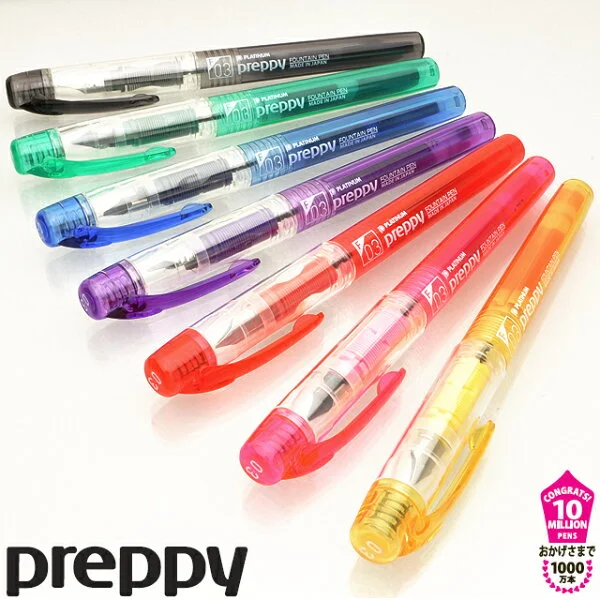
At under five dollars, the Preppy is the lowest-risk entry into fountain pens. But do not let the price fool you. It features Platinum’s legendary Slip and Seal cap mechanism that keeps ink from drying out for up to two years. The clear demonstrator body is perfect for showing off colorful inks, and the nib is surprisingly smooth for a pen at this price. Buy one in every available nib size and still spend less than a fancy coffee order.
Why Gen Z loves it: Absurdly affordable, zero commitment, and the demonstrator look is pure eye candy on camera.
3. LAMY Safari ($30)
The Safari is an icon. Its distinctive triangular grip, industrial design, and huge range of colors (including annual limited editions) have made it a staple in pen cases worldwide. The snap cap is convenient for quick notes, and LAMY’s nib-swapping system lets you try Extra Fine, Fine, Medium, or Broad without buying a whole new pen. Built from sturdy ABS plastic, it can handle life in a backpack.
Why Gen Z loves it: The design-forward aesthetic, collectible colorways, and the ability to customize nib sizes on a single pen body.
4. TWSBI Eco ($35)
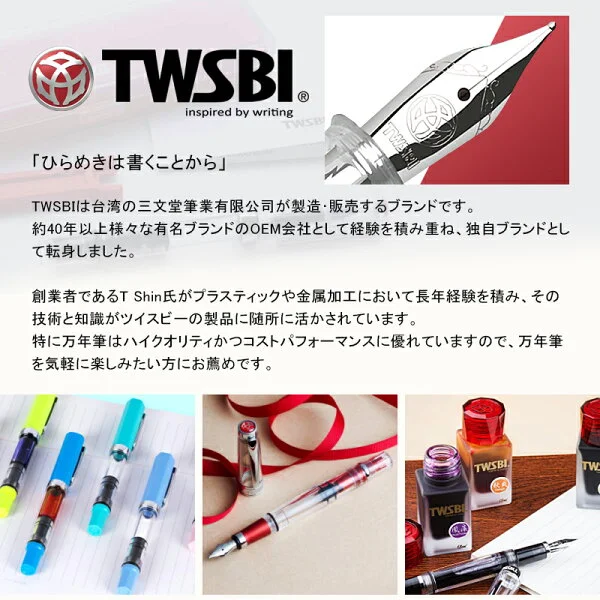
The Eco is the best piston-filler pen at this price — and possibly at any price under $100. The piston mechanism lets you fill directly from a bottle of ink (no cartridges or converters needed), and the large ink capacity means fewer refills. The fully transparent body turns your ink into a visual feature, and the writing experience is remarkably smooth. It is also built like a tank.
Why Gen Z loves it: The demonstrator aesthetic is peak TikTok material, the ink capacity is practical, and filling from a bottle feels like a ritual.
5. Pilot Metropolitan ($20)
The Metropolitan delivers a premium metal-body experience at a price that seems like a mistake. The brass construction with lacquer finish gives it genuine heft and sophistication. Pilot’s steel nibs are among the best in the industry at any price, and the Metropolitan writes flawlessly out of the box. It comes with a cartridge and a squeeze converter, making it versatile for both beginners and experienced users.
Why Gen Z loves it: It looks and feels expensive, writes like a dream, and impresses people who do not know it costs less than a pizza dinner.
Ink 101: A Beginner’s Guide to Fountain Pen Ink
One of the greatest joys of fountain pens is the world of ink that opens up once you move beyond basic cartridges. Here is what you need to know to get started.
Cartridges vs. Bottled Ink
Cartridges are pre-filled, disposable ink tubes that snap into your pen. They are convenient and mess-free — perfect for when you are starting out. Most pen brands make proprietary cartridges, though some use the international standard size.
Bottled ink is where the real fun begins. A single 50ml bottle can last months and costs roughly the same as a pack of cartridges. To use bottled ink, you need either a converter (a refillable cartridge-shaped device) or a pen with a built-in filling system like the TWSBI Eco. Bottled ink gives you access to hundreds of colors, special properties like shimmer and sheen, and the meditative ritual of filling your pen.
Ink Properties to Know
- Shading — ink pools darker in some areas and lighter in others, creating beautiful variation within a single color
- Sheening — certain inks produce a metallic sheen on top of the base color (like a red sheen on a dark blue ink)
- Shimmer — tiny metallic particles suspended in the ink that sparkle on the page
- Water resistance — some inks are waterproof or water-resistant, important if your notes might get wet
- Dry time — how quickly ink dries on paper, which matters for lefties and anyone who smudges
Recommended Starter Inks
- Pilot Iroshizuku Kon-peki — a stunning blue with beautiful shading, one of the most universally loved inks in the hobby
- Diamine Oxblood — a rich, dark red that looks sophisticated in any pen
- Waterman Serenity Blue — a well-behaved, easy-to-clean blue that works in every pen
- Pilot Blue-Black — the workhorse, a professional blue-black that is water-resistant and works in any setting
Paper Matters
Not all paper is created equal for fountain pens. Cheap copy paper will cause feathering (ink spreading along the paper fibers) and bleedthrough (ink soaking to the other side). Invest in fountain-pen-friendly paper for a dramatically better experience. Good affordable options include Maruman Mnemosyne, Clairefontaine, and Midori MD. For journaling, Leuchtturm1917 and Hobonichi planners are community favorites.
Journaling Methods That Pair Perfectly with Fountain Pens
The fountain pen revival and the journaling movement are deeply intertwined. Here are some popular methods to try.
Morning Pages. Write three pages of stream-of-consciousness thoughts first thing in the morning. No editing, no judgment — just get everything out of your head and onto paper. The slow pace of a fountain pen makes this practice even more reflective.
Bullet Journaling. The Bullet Journal method combines to-do lists, habit tracking, and journaling in a single notebook using a simple system of bullets and symbols. Fountain pens add personality through different ink colors for different types of entries.
Gratitude Journaling. Write down three to five things you are grateful for each day. Simple, quick, and scientifically proven to improve well-being. Using a beautiful pen and ink makes the practice feel special rather than like homework.
Art Journaling. Combine writing with sketches, doodles, and ink swatches. Fountain pens are wonderful drawing tools — a flex nib can produce line variation that rivals a dip pen, and the variety of ink colors available is staggering.
Commonplace Book. An old tradition where you collect quotes, ideas, observations, and snippets of wisdom in a single notebook. It is a curated collection of everything that resonates with you — like a Pinterest board, but analog and permanent.
Getting Started: A Step-by-Step Guide
Here is exactly how to begin your fountain pen journey, from zero to your first written page.
Step 1: Pick your first pen. Choose one from the list above based on your budget. If you genuinely cannot decide, get the Pilot Kakuno or the Platinum Preppy — they are cheap enough that there is zero pressure.
Step 2: Get ink. Start with the cartridges that come with your pen. They are perfectly fine, and they eliminate one variable while you learn. When you are ready to explore, grab a bottle of Pilot Iroshizuku or a set of Diamine ink samples.
Step 3: Find the right paper. Use the best paper you have available. A cheap composition notebook will work in a pinch, but your experience will improve dramatically with fountain-pen-friendly paper. A single Maruman Mnemosyne pad is a great starting point.
Step 4: Write something — anything. Do not overthink it. Write your grocery list. Copy a favorite song lyric. Describe what you see out the window. The point is to feel the pen in your hand and the ink flowing onto paper. Give yourself permission to write badly.
Step 5: Establish a small ritual. Dedicate just five minutes a day to writing by hand. Morning pages, a daily gratitude list, a single journal entry — whatever feels natural. Consistency matters more than duration. The habit will grow on its own.
Step 6: Explore the community. Join r/fountainpens on Reddit, follow #fountainpen on TikTok and Instagram, or find a local pen club. The community is one of the best parts of this hobby. Ask questions, share your first writing samples, and let other enthusiasts guide your exploration.
The Bigger Picture
The Gen Z fountain pen revival is about more than pens. It is part of a broader cultural shift toward intentionality — a pushback against the disposable, the algorithmic, and the frictionless. In choosing a tool that requires care, patience, and practice, young writers are making a statement about the kind of relationship they want to have with their own thoughts.
A fountain pen will not fix your attention span overnight. It will not cure anxiety. But it will give you a reason to sit down, slow down, and reconnect with the physical act of thinking on paper. In a world that profits from your distraction, that is a quietly radical thing to do.
Pick up a pen. Open a notebook. Start writing. The rest will follow.
🖊️ Featured Pens in This Article