Nib Guide
How to Choose the Right Fountain Pen Nib Size
Published: 2026-04-04 · Updated: 2026-04-06
Choosing the right nib size is one of the most important decisions when buying a fountain pen. The wrong size can make even the best pen feel disappointing, while the right one transforms your writing experience. Here is everything you need to know.
Standard Nib Sizes
Extra Fine (EF)
Line width: 0.2-0.4mm
The thinnest commonly available nib. Extra Fine nibs are popular for writers with small handwriting, journaling in tight spaces, and writing Japanese characters (kanji) where fine lines are essential. They use the least ink and work best on lower-quality paper.
Best for: Small handwriting, kanji, Hobonichi planners, cheap paper
Fine (F)
Line width: 0.3-0.5mm
The most popular nib size worldwide. Fine nibs offer a good balance between detail and smoothness. They are versatile enough for both everyday writing and more detailed work. If you are unsure what size to get, Fine is always a safe choice.
Best for: General writing, beginners, everyday notes
Medium (M)
Line width: 0.4-0.7mm
Medium nibs provide a richer writing experience with more ink on the page. They showcase ink properties like shading and sheen better than finer nibs. The wider line provides a smoother feel since more of the tipping material contacts the paper.
Best for: Ink enthusiasts, signatures, general correspondence
Broad (B)
Line width: 0.6-0.9mm
Broad nibs lay down a thick, wet line that maximizes ink saturation, shading, and sheen. They feel extremely smooth but use ink quickly and may feather on cheap paper. Great for headings, calligraphy practice, and anyone who loves seeing their ink at full expression.
Best for: Ink showcasing, headings, calligraphy, signatures
Japanese vs Western Sizing
This is the single most important thing to understand about nib sizes:
Japanese nibs run approximately one size finer than Western nibs.
A Japanese Fine writes more like a Western Extra Fine. A Japanese Medium writes more like a Western Fine. This applies to Pilot, Sailor, and Platinum pens compared to LAMY, Pelikan, and Montblanc.
| Designation | Japanese Width | Western Width |
|---|---|---|
| EF | ~0.2mm | ~0.3mm |
| F | ~0.3mm | ~0.4mm |
| M | ~0.5mm | ~0.6mm |
| B | ~0.7mm | ~0.8mm |
Practical advice: If you like a LAMY Safari in Fine, try a Japanese pen in Medium. If you like a Pilot Metropolitan in Fine, a LAMY Fine may feel too broad.
Specialty Nibs
Stub / Italic
Stub nibs have a flat, rectangular tipping that creates thick downstrokes and thin cross-strokes. They add beautiful character to handwriting without requiring calligraphy skills. The TWSBI Eco in 1.1mm stub is an excellent and affordable entry point.
Flex
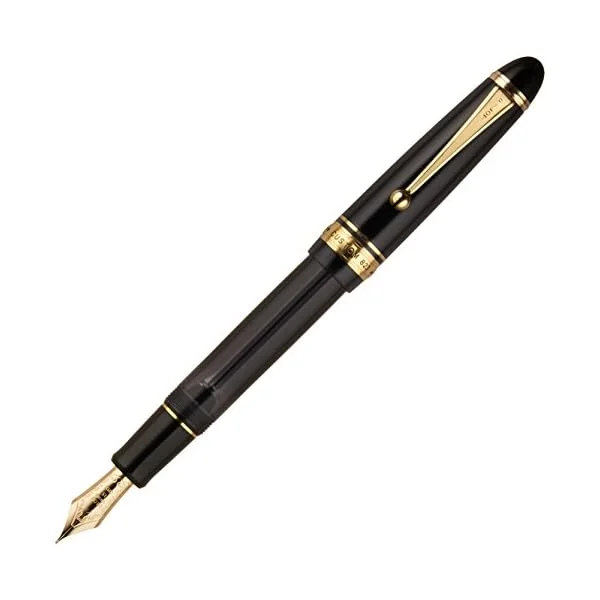
Flex nibs respond to writing pressure — press harder for thick lines, use light pressure for thin lines. Modern flex nibs (like Pilot’s FA nib on the Custom 742) offer modest flex compared to vintage pens, but they still add wonderful line variation.
Zoom (Z)
Unique to Sailor, the Zoom nib changes line width based on writing angle rather than pressure. Hold the pen upright for thin lines, lay it flat for thick ones. An innovative nib for artists and adventurous writers.
Posting (PO)
A Pilot specialty nib designed specifically for writing with the cap posted on the back of the pen. The angle is optimized for the higher writing angle this creates.
Waverly (WA)
Another Pilot specialty. The Waverly nib has an upturned tip that makes it smooth at any writing angle. It is extremely forgiving for writers who hold their pen at unusual angles.
Nib Material: Steel vs Gold
Stainless Steel Nibs
- Firmer, more consistent writing experience
- Less expensive
- More durable and resistant to damage
- Perfect for beginners and daily beaters
- Examples: LAMY Safari, TWSBI Eco, Kaweco Sport
Gold Nibs (14K, 18K, 21K)
- Softer, more responsive to pressure
- Often described as having more bounce or spring
- Higher purity gold (21K) tends to be softer than lower (14K)
- A different feel, not necessarily better
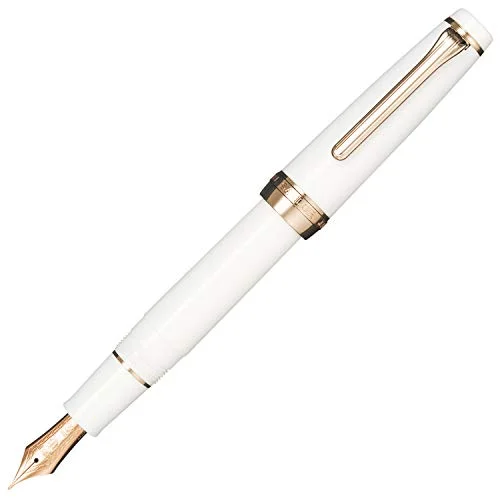
- Examples: Pilot Custom 823 (14K), Pelikan M800 (18K), Sailor Pro Gear (21K)
Important: Gold nibs are not inherently smoother than steel nibs. A well-tuned stainless steel nib can be just as smooth as gold. The difference is in the feel and flex response, not smoothness.
Our Recommendations by Use Case
Daily journaling: Japanese Fine or Western Extra Fine — compact lines that fit more text per page
Letter writing: Western Medium or Japanese Medium-Fine — a pleasant, readable line that shows off your ink
Ink reviewing: Western Broad or stub — maximum ink on page to evaluate color properties
Note-taking on cheap paper: Japanese Fine or Extra Fine — less ink means less feathering and bleedthrough
Calligraphy and art: Stub, italic, or flex nibs — line variation adds visual interest
How to Test a Nib
If possible, try before you buy. Many pen shops have sample pens available. When testing, write your normal text at your normal speed — do not just draw circles and figure-eights. Pay attention to:
- Smoothness — does the nib glide or catch?
- Feedback — can you feel the paper? Is it pleasant or annoying?
- Wetness — is the line saturated or dry?
- Line width — does it match what you expected?
- Starting reliability — does it write on the first stroke after sitting?
The perfect nib size is deeply personal. What feels perfect to one writer may feel too fine or too broad for another. Do not be afraid to experiment — that is half the fun of this hobby.
🖊️ Featured Pens in This Article