Pen Review
Japan's Big Three: Pilot vs Sailor vs Platinum Compared
Published: 2026-04-07 · Updated: 2026-04-10
Japan’s three great fountain pen houses — Pilot, Sailor, and Platinum — each bring a distinct philosophy to pen making. While Pilot and Sailor often dominate the conversation, Platinum deserves equal billing. This comparison examines all three brands across every dimension that matters to help you decide where to start — or where to go next.
Company Histories
Pilot (founded 1918, Tokyo) is the giant. Japan’s largest pen manufacturer, Pilot is known for engineering innovation and scale. They produce everything from disposable ballpoints to heirloom-grade fountain pens, and their research into ink chemistry and nib metallurgy is unmatched in the industry.
Sailor (founded 1911, Hiroshima) is the oldest, established as Japan’s first fountain pen maker. Sailor is the artisan of the group — smaller in scale, intensely focused on nib craftsmanship, and prolific with limited edition releases that fuel a passionate global collecting community.
Platinum (founded 1919, Tokyo) is the often-overlooked third member. This is a mistake. Platinum has produced some of the most important innovations in fountain pen history, including the slip-and-seal cap mechanism that keeps ink wet for over a year without use. They offer arguably the best value in Japanese fountain pens.
Nib Character: Three Distinct Personalities
The nib is the heart of any fountain pen, and this is where the three brands differ most dramatically.
Pilot: Butter Smooth
Pilot nibs are polished to near-frictionless perfection. Their 14K and 18K gold nibs glide across paper with a sensation often described as “writing on glass.” There is minimal feedback — the pen simply flows. Pilot also offers the widest nib selection of any manufacturer. The Custom 742 alone comes in 15 nib options, including exotic grinds like the Falcon (FA) for flex writing, the Waverly (WA) for a forgiving sweet spot, and the Posting (PO) for writing with the cap posted.
Pilot nibs suit writers who want effortless, smooth writing with zero resistance.
Sailor: Pencil-Like Feedback
Sailor nibs are the polar opposite of Pilot. Their 21K gold nibs provide distinctive tactile feedback — a controlled, pleasant sensation of the nib interacting with the paper surface. It is emphatically not scratchiness. It is the feeling of connection to your writing surface that many pen enthusiasts find deeply satisfying and even addictive.
Sailor nibs come in fewer options but include the unique Zoom (Z) nib that varies line width based on writing angle, and a range of specialty nibs created by their legendary nib meisters.
Sailor nibs suit writers who want to feel every fiber of the paper and enjoy a more engaged writing experience.
Platinum: The Middle Path
Platinum nibs occupy the space between Pilot’s smoothness and Sailor’s feedback. Their 14K gold nibs have a subtle, refined feedback — present but never intrusive. It is a balanced writing experience that many find to be the most natural of the three. Platinum nibs are also notably soft compared to the other brands, offering a slight give under pressure that adds character to handwriting without being a true flex nib.
Platinum nibs suit writers who want a natural, balanced feel without the extremes of either direction.
Flagship Models Compared
The Premium Tier
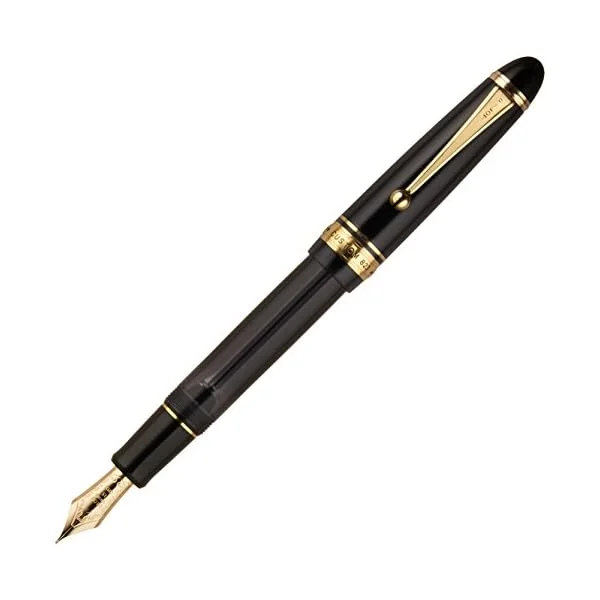
Pilot Custom 823 (~$270) The 823 is widely considered one of the best fountain pens at any price. It uses a vacuum filling system with enormous ink capacity (approximately 1.4ml), has a large 14K nib with Pilot’s signature smoothness, and features a demonstrator-style body that shows your ink sloshing inside. It is a functional masterpiece.
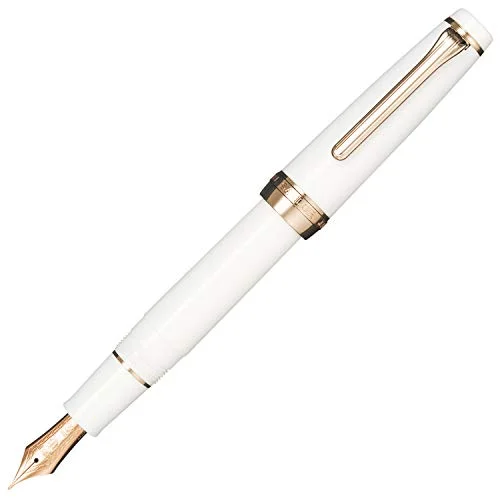
Sailor Pro Gear (~$240) The Pro Gear is Sailor’s signature design — a flat-topped cigar shape with a distinctive anchor logo on the bi-color 21K gold nib. It is the pen that launches a thousand limited editions. The standard black-with-gold is classic, but the Pro Gear truly shines in the dozens of exclusive colorways released each year in collaboration with pen shops worldwide.
Platinum Century #3776 (~$180) The best value flagship in the pen world. The #3776 features a 14K gold nib, Platinum’s slip-and-seal cap mechanism, and a large ink capacity via converter. At nearly $100 less than the Custom 823, it punches far above its price. The “Nice” (demonstrator) version is particularly popular, and the Chartres Blue colorway has become iconic.
Entry Level
Pilot Metropolitan / Kakuno ($20-$15) Pilot dominates the entry level. The Metropolitan is a metal-bodied pen with a steel nib that writes far better than its price suggests. The Kakuno is a playful, lightweight pen popular with beginners and children. Both use Pilot’s proprietary cartridges or the CON-40/CON-70 converter.
Sailor Compass 1911 (~$60) Sailor’s entry point is higher than Pilot’s. The Compass (formerly Lecoule) offers a steel nib with a hint of Sailor’s characteristic feedback at a reasonable price, though it lacks the magic of their gold nib offerings.
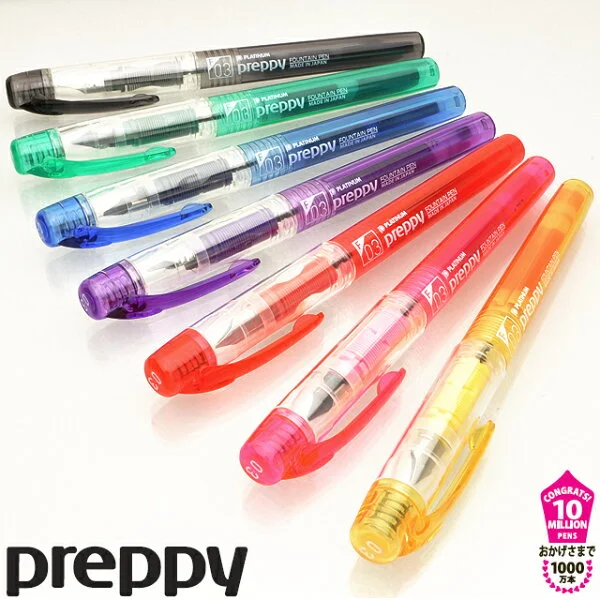
Platinum Preppy / Plaisir ($5-$20) The Platinum Preppy is the greatest value in fountain pens — period. A $5 pen with a stainless steel nib, the slip-and-seal cap, and surprisingly good writing quality. The Plaisir is the metal-bodied version of the same pen for $20. No other brand offers this level of quality at this price.
Filling Systems
Pilot leads in variety and innovation. The Custom 823 uses a vacuum filler. The Custom Heritage 92 is a piston filler. The Vanishing Point uses cartridge/converter in a retractable design that should not work but somehow works brilliantly. Pilot’s CON-70 converter (push-button mechanism) holds significantly more ink than standard converters.
Sailor is almost exclusively cartridge/converter across all models. The standard Sailor converter is functional but holds less ink than Pilot’s CON-70. This is Sailor’s weakest area — the lack of a piston or vacuum filler in their lineup is a missed opportunity.
Platinum also primarily uses cartridge/converter, but their converter mechanism is well-designed and their cartridges hold a generous amount of ink. The slip-and-seal cap compensates for converter limitations by ensuring the pen is always ready to write even after extended periods of non-use.
Ink Ecosystems
All three brands produce excellent proprietary inks.
Pilot Iroshizuku is the gold standard of fountain pen ink. The line features 24 colors named after Japanese natural phenomena (Kon-peki for cerulean blue, Yama-budo for wild grape crimson, Tsukushi for horsetail brown). Every color is well-behaved, beautifully saturated, and shows excellent shading properties.
Sailor Shikiori and the Manyo series offer a wide range of colors with distinctive sheen properties. Sailor inks tend to have more shimmer and sheen than Pilot’s cleaner approach. Their limited edition store-exclusive inks are highly collectible.
Platinum offers a smaller ink range but includes some standouts. Platinum Carbon Black is considered the best waterproof black ink in the world — truly permanent and archival. Their Mixable Ink series allows you to blend custom colors.
Build Quality and Design Philosophy
Pilot prioritizes function. Their pens are engineered — every element serves a purpose. Designs tend to be understated and classic. The Vanishing Point exemplifies this: the entire pen is designed around the retractable nib mechanism. Form follows function.
Sailor prioritizes expression. They release dozens of limited edition colors each year — seasonal series, store exclusives, regional collaborations — creating a vibrant collector’s market. The flat-top Pro Gear silhouette is instantly recognizable, and the bi-color nibs are visual signatures.
Platinum prioritizes value and reliability. Their pens may lack the excitement of Sailor’s color releases or Pilot’s mechanical innovation, but they deliver exceptional quality at every price point. The slip-and-seal cap is a practical innovation that solves a real problem — dried-out pens from irregular use.
Which Brand Should You Choose?
Choose Pilot if you:
- Want the smoothest possible writing experience
- Value innovative engineering and filling systems
- Need a strong entry-level option (Metropolitan, Kakuno)
- Want access to the Iroshizuku ink line
- Prefer understated, functional design
Choose Sailor if you:
- Crave tactile feedback when writing
- Enjoy collecting limited edition colors
- Appreciate the craftsmanship of a 21K gold nib
- Want a pen with visual personality
- Are drawn to the flat-top Pro Gear silhouette
Choose Platinum if you:
- Want the best value at every price tier
- Write irregularly and need a pen that stays wet (slip-and-seal)
- Prefer balanced feedback — neither too smooth nor too toothy
- Need a truly waterproof ink (Carbon Black)
- Want a quality gold nib pen for under $200
The Honest Truth
Most fountain pen enthusiasts end up owning pens from all three brands. They offer such different writing experiences that comparing them is like comparing three excellent restaurants with different cuisines — each satisfies a different craving. Start with whichever philosophy resonates most with you, and let curiosity guide you to the others.
🖊️ Featured Pens in This Article