Pen Review
Lamy 2000 Review: The Bauhaus Workhorse That Changes Your Mind
Published: 2026-05-10 · Updated: 2026-05-10
Lamy 2000 Review: The Bauhaus Workhorse That Changes Your Mind
I bought my Lamy 2000 in 2021 with a half-formed plan to flip it. Five years later it sits clipped to my notebook, capped over a fingerprint smudge I have stopped trying to wipe off, and it is the pen I reach for when I have to actually get work done. The flip never happened. The pen wore me down — slowly, deliberately, the way the design itself was meant to.
This is a long-term review. Not a first-impression piece, not a comparison thrown together over a weekend. Five years, three nib services, two ink changes, one near-loss in a taxi, and roughly two and a half thousand pages of meeting notes, journal entries, and rejected drafts.
The Lamy 2000 is the pen people argue about online. Either it is the perfect daily writer or it is overhyped industrial design with a temperamental nib. Both camps are partly right. What follows is what I have actually learned about it.
The 1966 design that refuses to age
Gerd Müller designed the Lamy 2000 in 1966. Müller had trained under Dieter Rams at Braun, and the Bauhaus DNA shows in every millimeter of this pen. Sixty years later, Lamy still produces it with the same silhouette, the same Makrolon body, the same brushed stainless steel grip, the same flush spring-loaded clip. No facelifts. No anniversary editions that quietly redesign the cap. Just the same pen, year after year.
That kind of continuity is almost extinct in consumer goods. The fact that a 2026 Lamy 2000 is functionally identical to a 1966 one is not nostalgia — it is a quiet argument that the design got it right the first time.
In the hand, the pen disappears. That is the highest compliment I can give an industrial object. The taper from cap to barrel is uninterrupted. There is no step where the section meets the barrel. The clip sits flush until you press the small post at the cap top, which lifts the clip enough to slide it onto a notebook. Capped, the silhouette is a single matte cylinder.
The Makrolon body, and the three-week problem
Makrolon is fiberglass-reinforced polycarbonate. Lamy then brushes the surface in fine longitudinal lines, which is what gives the body its distinctive matte texture and that subtle grippy quality.
Here is the thing nobody tells you in the first-impression videos: Makrolon needs about three weeks to feel right.
Out of the box, the surface feels almost waxy. Slightly cool. A little too smooth. You will pick up the pen, write a paragraph, and think you have made a mistake. Most negative first reviews of the Lamy 2000 are written in this window. The Makrolon needs to absorb a small amount of skin oil from your hand. After about three weeks of regular use, the texture changes. It becomes warmer to the touch, slightly more matte, and the brushing pattern catches your fingertips just enough to feel intentional.
I had to be told this by a friend who had owned his pen for a decade. Without that context I would have sold mine. The “love or quit” phenomenon — that thing where Lamy 2000 owners either swear by the pen or get rid of it within a month — is largely about whether you wait out the break-in.
The hooded 14k nib
The nib is the part that stops people. It is a 14k gold nib, hooded almost completely by the steel grip section, with only a small triangle of gold visible at the tip. The hood is part of why the pen looks so monolithic — there is no shouldered nib breaking up the silhouette.
It writes like a slightly springy 14k nib should write. Not a wet noodle. Not a nail. There is a small amount of give that you feel more than see. It is not a flex nib and any review that calls it one is wrong.
Mine is a fine. Lamy fines run a little broader than Japanese fines but a little finer than most German fines. It puts down a clean, slightly wet line that handles every paper I have tried, including the cheap copy paper at my office which murders most other gold nibs.
The nib has a sweet spot. This is the second thing nobody warns you about. The hooded design means the tipping is reasonably narrow, and you have to roll the pen until you find the angle where both tines contact the paper evenly. Once you find it, the pen rewards you. If you do not find it, every stroke feels scratchy and you will hate the pen.
After five years I find the sweet spot in the first two seconds without thinking. New owners often need a week.
The piston filler and 1.5 ml of ink
The Lamy 2000 is a piston filler. The blind cap at the back of the barrel unscrews to reveal the piston knob. Twist counterclockwise to draw ink, clockwise to expel.
Capacity is about 1.5 ml, which is large by modern standards. A Pilot Custom 74 holds roughly 0.9 ml in its CON-70 converter. A Sailor Pro Gear holds about 0.7 ml. The 2000 will go for two to three weeks of daily writing on a single fill, which means you forget about ink for long stretches and that is exactly what a daily driver should let you do.
The ink window is a small translucent strip near the section. It is subtle enough that the pen still looks monolithic, but visible enough that you can check your level under desk lighting.
The flush spring-loaded clip
The clip is a small marvel. It is machined steel, sits absolutely flush against the cap when at rest, and has a tiny actuating post at the cap finial. Press the post and the clip lifts about two millimeters, enough to slide it onto a thick notebook cover or a shirt pocket. Release the post and the spring snaps the clip back down with surprising authority.
After five years of being clipped to notebooks, shirt pockets, blazer lapels, and once a leather wallet, the clip on mine still snaps shut as crisply as the day I bought it. I have never had it slip off.
How it compares to the obvious rivals
People shop the Lamy 2000 against three pens, so let me address each.
Versus the Pelikan M800. The M800 is the more luxurious object. Heavier, gold trim, the classic shouldered nib that looks like a fountain pen is supposed to look. It costs roughly twice as much. The M800 nib is generally considered more forgiving than the 2000 nib — wider sweet spot, more visible spring. If you want a pen that announces itself on the desk, choose the M800. The Lamy 2000 announces nothing.
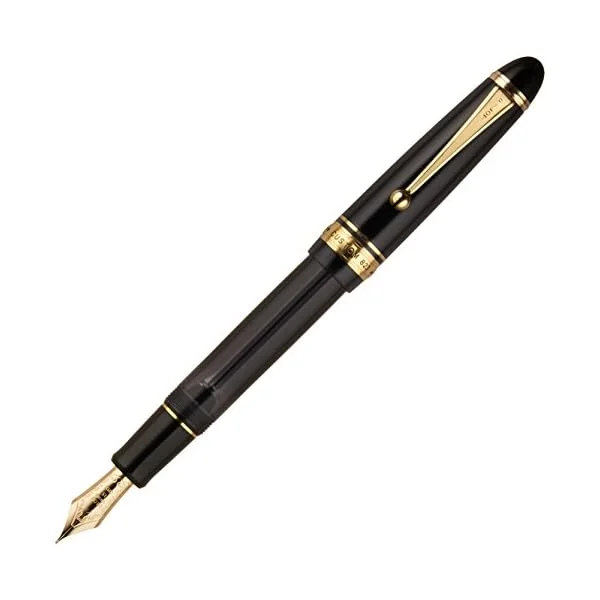
Versus the Pilot Custom 823. The 823 is a vacuum filler, also a daily driver pen, also a pen that disappears in the hand. The 823 nib is more forgiving than the 2000 nib and the demonstrator body is a real pleasure if you like watching ink slosh around. The 823 holds about 2.2 ml, even more than the 2000. The disadvantage is that the 823 looks like a pen. The 2000 looks like a tool.
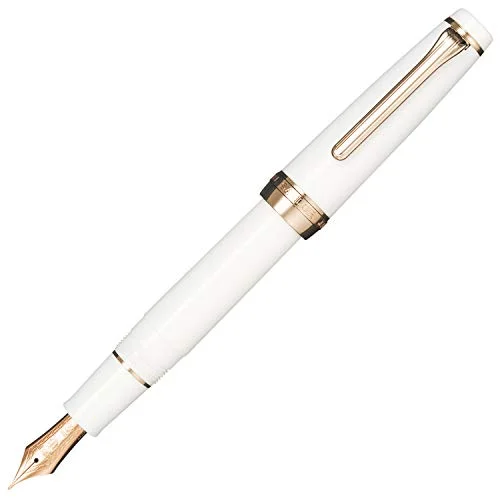
Versus the Sailor 1911L. The 1911L is a different proposition entirely. Cigar-shaped, classical, the famous Sailor “feedback” nib that some people love and some people find scratchy. If you want feedback in the nib and a pen that looks elegant in a meeting, the 1911L is the pick. If you want zero feedback and a pen that looks like architecture, the 2000 wins.
For deeper takes on price tiers and brand comparisons, see best fountain pens under 200 and Pilot vs Lamy.
The honest downsides
I love this pen, but a review without downsides is marketing.
The nib lottery. Lamy quality control on the 2000 nib is variable. Some pens write perfectly out of the box. Others arrive with one tine slightly higher than the other, a baby’s bottom, or a flow that is too dry. If you buy one, buy from a retailer who tests and tunes nibs before shipping. Goulet, Pen Boutique, Yoseka, Cult Pens, Casa della Stilografica — these places will save you a return shipment.
The sweet spot. I mentioned it above and I will mention it again because it is the single most common reason people return the pen. The hooded nib has a narrower angular tolerance than a shouldered nib. If you rotate the pen as you write, you will feel scratch. New owners often interpret this as a defective nib when the actual fix is to hold the pen at a consistent angle.
The nib is not user-swappable. Unlike the Lamy Safari and Al-Star, where you can pop a nib off and slide a new one on, the Lamy 2000 nib unit is a screw-in assembly that requires care to remove and is not really meant to be swapped at home. If you want to try a different nib size, you are sending the pen to a nibmeister or buying a replacement nib unit and following a careful procedure.
Makrolon shows everything. Fingerprints, ink splatters, the slight polishing that happens at the contact points where you hold the pen. After five years mine has a faint brighter band where my fingertips sit. Some people love this patina. Others find it disappointing.
The clip post is small. If you have arthritic hands or thick fingers, depressing the small clip-actuating post at the cap finial can be fiddly. It is not a real problem but it is not zero friction either.
What I have actually used it for
Five years of daily writing breaks down roughly like this. About half the use has been meeting notes — long sessions where I am taking notes for an hour straight and the 1.5 ml capacity matters. About a quarter has been journal entries, where the slight nib spring makes longhand writing pleasant. The rest is signing things, drafting outlines, and the occasional letter.
I have used the pen with Iroshizuku Take-Sumi, Pilot Blue-Black, Sailor Yama-Dori, and currently Diamine Oxblood. It handled all of them without complaint. I cleaned it once a year by flushing with water and a drop of pen flush. The piston seal has not needed service.
For ink choices that pair well with daily writers like this, see best everyday fountain pen inks.
Who should buy a Lamy 2000
If this is your first fountain pen, do not start here. Start with a Pilot Kaküno, a Lamy Safari, or a TWSBI Eco. The 2000 rewards a writer who already knows what they want from a nib and how to hold a pen consistently. If you want a starter recommendation see best fountain pens for beginners.
If you have been writing with steel-nib pens for a year or two and want to move up to gold without the decoration of a traditional luxury pen, the 2000 is a near-perfect step. For the steel-versus-gold question see gold nib vs steel nib.
If you want a piston filler with capacity that lets you forget about ink, the 2000 is one of the best in the price bracket. For the broader filling-systems question see fountain pen filling systems guide.
If you want something that looks like a pen, do not buy the 2000. Buy a Pelikan or a Sailor. The 2000 looks like a tool and it does not care if you find it beautiful.
FAQ
1. Is the Lamy 2000 worth the price? At around 200 to 230 USD it is one of the cheapest gold-nib piston fillers from a major brand. Compared to a Pelikan M800 or Sailor King of Pen, it is a bargain. Compared to a Pilot Custom 74, it is a step up in build but a step down in nib forgiveness.
2. Does the Makrolon scratch easily? Surface scuffs from keys or coins are visible. Light fingertip polishing happens over years. The body is structurally extremely durable — mine has survived a four-foot drop onto tile with only a slight cap-edge mark.
3. Can I get a stub or italic nib? Lamy does not factory-offer stubs on the 2000, but nibmeisters such as Mike Masuyama, John Mottishaw, or Mark Bacas will grind a 2000 nib to stub, cursive italic, or architect. Plan for a wait.
4. Is the EF nib too fine? Lamy EF on the 2000 is closer to a Japanese F. If you want a true hairline, look at a Sailor or Pilot EF.
5. Will it dry out if left unused? Capped properly, mine has gone three weeks between uses and still started immediately. The cap inner liner seals well.
6. Is the cap snap or screw? Snap cap. Two clicks. The snap is firm and the cap has not loosened in five years.
7. Can I use any ink in it? Standard fountain pen inks, yes. Avoid pigmented, iron-gall, or shimmer inks unless you commit to careful regular cleaning. Piston seals are the wear part you are protecting.
8. How does it compare to the Lamy Safari? Different pens entirely. The Safari is a 30 USD steel-nib student pen, the 2000 is a 200 USD gold-nib daily driver. Same brand, almost no overlap. If you love your Safari and want to stay in the family with a real upgrade, the 2000 is the answer.
Final word
I bought a Lamy 2000 thinking I would resell it. I kept it because it became invisible. The pen does not announce itself, does not flatter the writer, does not look special on the desk. It just works, every day, year after year, with the kind of quiet competence that you only appreciate after you have owned it long enough to stop noticing it.
That is the highest praise I can give an object. Five years in, the Lamy 2000 has become the pen I would replace immediately if I lost it, and the pen I would never sell. It is not perfect. The nib has a sweet spot, the Makrolon takes time to break in, the clip post is fiddly. But it is the closest thing to a permanent pen I have ever owned, and sixty years of unchanged design is a bet I would not bet against.
🖊️ Featured Pens in This Article