Guide
Which Japanese Fountain Pen Brand Is Right for You? Pilot, Sailor, or Platinum
Published: 2026-05-10 · Updated: 2026-05-10
Every few weeks someone asks me the same question: “I want my first proper Japanese fountain pen — Pilot, Sailor, or Platinum?” And every time, my honest answer is the same: it depends entirely on you. The big three are not interchangeable. They are three genuinely different writing philosophies wearing similar-looking suits, and the “best” one is whichever matches your hand, your taste, and the way you actually use a pen.
This is deliberately not a spec-by-spec head-to-head. If you want the full nib-by-nib, build-by-build, price-by-price breakdown, I’ve already written that — go read Pilot vs Sailor vs Platinum Compared and bookmark it as your reference. This article does something different. It’s a decision guide. By the end you’ll know which brand fits you, and why.
Start Here: 5 Questions That Decide It
Before any recommendation, answer these five questions honestly. Your answers point straight at a brand.
- How big is your handwriting? If your letters are small and tight, you need a nib that lays down a thin, controlled line. If you write large and loose, a too-fine nib will feel cramped and feedback-heavy.
- Do you want smoothness or feedback? This is the single most important question. Some people want a pen that glides with zero resistance, like skating on glass. Others love the faint tactile “scritch” that tells you exactly where the nib is on the page. There’s no right answer — only your answer.
- What are you upgrading from? Coming off a Lamy Safari, a gel pen, or nothing at all changes what will feel like an upgrade versus a sideways move.
- What’s your budget? All three brands have a roughly $50 entry pen and flagships north of $300. Knowing your ceiling narrows the field fast.
- What will you mostly do with it? Journaling, daily work notes, sketching, and signing documents each reward different nib characters and pen sizes.
Hold your answers in mind. Now let’s match you to a brand.
If Your Handwriting Is Small and Precise
Small, dense handwriting needs a fine or extra-fine nib that stays crisp and doesn’t bleed your letters into blobs. This is where Japanese pens shine in general — Japanese fines run noticeably finer than European fines, because the language requires writing dense kanji in tiny boxes.
Within the big three, Platinum and Sailor own this territory. Platinum’s extra-fine nibs are famously needle-like, perfect if you write tiny and want every loop to stay legible. Sailor fines are slightly broader but add that lovely feedback so you feel exactly where the tip is — great for control.
My pick: Platinum 3776 Century in EF or F if you want the absolute finest, controlled line. Sailor Pro Gear in F if you want fine plus tactile feedback. Pilot fines are excellent too, but if precision is your top priority, start with Platinum. Not sure which width to ask for? My nib size guide walks through how Japanese sizing differs from European.
If You Want the Smoothest Possible Glide
Some people put pen to paper and want it to feel like the pen is doing the work — no resistance, no scratch, just flow. If that’s you, the answer is short.
Pilot. Pilot nibs are polished to a near-frictionless finish that enthusiasts describe as “writing on glass.” Their gold nibs in particular (Custom 74, Custom 823) are about as smooth as production fountain pens get, and even the steel-nibbed Metropolitan is smoother than most pens at its price.
My pick: Pilot Custom 74 (MF or M) for an affordable gold-nib glide, or the Custom 823 if you want a larger pen with a brilliant vacuum filler. If you specifically want a smooth pen you can clip on and click open one-handed, the Vanishing Point is the smoothest retractable on the market.
If You Love Tactile Feedback / Pencil Feel
The flip side. Some of us find a glassy-smooth nib slightly too slippery — it skates, and you lose the sense of control. If you grew up loving the drag of a sharp pencil on good paper, you want feedback.
Sailor. Sailor’s 21K nibs are the most feedback-forward of the big three. It is emphatically not scratchiness — it’s a controlled, pleasant “scritch-scritch” that tells your hand exactly where the tip is. Many writers, myself included, find it quietly addictive. Once you’ve written a page with a Sailor fine, smooth pens can feel a little numb.
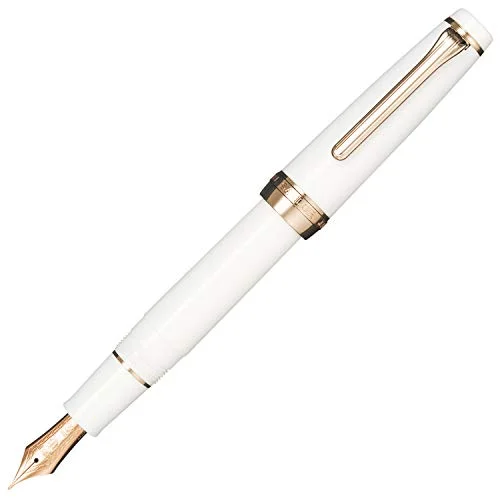
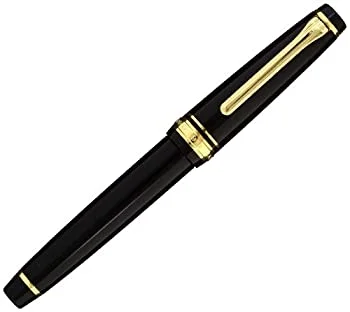
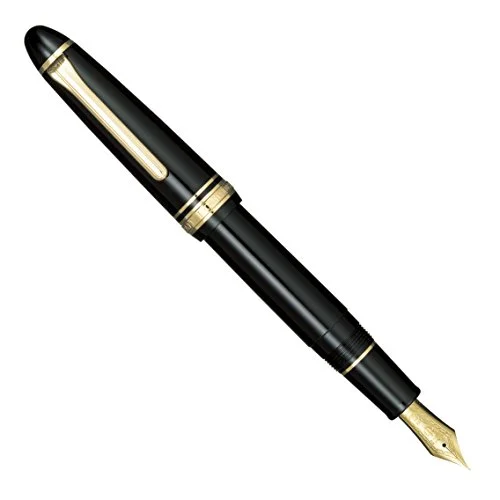
My pick: Sailor Pro Gear or Pro Gear Slim in F or MF. The Slim is a fantastic size for smaller hands and journaling.
If You’re Upgrading From a Lamy Safari
The Safari is where a huge number of people start, and it’s a great pen — but its nib is smooth-bordering-on-bland and its body is unapologetically plasticky. When people upgrade, they’re usually chasing two things: a gold nib’s springy character, and a more refined object in the hand.
Pilot Custom 74 or Sailor Pro Gear. Both are the classic “first gold nib” upgrade. The Custom 74 gives you Pilot’s signature glide with a touch of softness; the Pro Gear gives you Sailor’s feedback in a beautifully balanced cigar-shaped body. Either one will feel like a genuine step up, not a lateral move.
My pick: If your Safari nib felt boringly smooth and you want more of that done better, go Pilot. If it felt characterless and you want personality, go Sailor. For a deeper look at how Pilot stacks up against Lamy specifically, see Pilot vs Lamy.
If You Want a Pen That Won’t Dry Out for Months
Here’s a real-world problem nobody warns beginners about: most fountain pens dry out if you leave them capped and unused for a couple of weeks. The ink in the feed evaporates, and you’re stuck with hard starts or a full cleaning. If you’re the kind of person who’ll use a pen for a week, then forget it in a drawer for a month, this matters enormously.
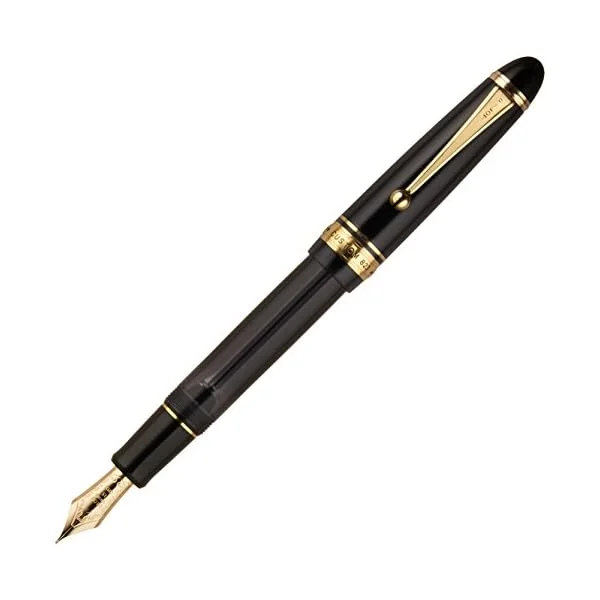
Platinum, no contest. Platinum’s “Slip & Seal” cap mechanism creates an airtight inner seal that keeps ink wet and ready for over a year of disuse. I’ve genuinely picked up a Platinum 3776 after months and had it write on the first stroke. No other mainstream brand does this as well.
My pick: Platinum 3776 Century. It’s the best “occasional use” fountain pen in the world, and it happens to be a superb writer regardless.
If Budget Is Tight but You Want “Real” Japanese
You don’t need to spend $150 to taste what these brands do. Each has a genuinely good entry pen that carries the house character.
- Pilot Metropolitan (~$20) — smooth steel nib, metal body, absurd value. The best first fountain pen, full stop.
- Sailor Pro Gear Slim / Compass (~$25–35) — steel-nib Sailor with a hint of that signature feedback.
- Platinum Plaisir / Preppy (~$5–22) — the Preppy at five dollars is the cheapest way to feel a real Japanese nib, and it has the Slip & Seal seal too.
My pick: Start with the Pilot Metropolitan. If you want a fuller starter shortlist across all brands, see best fountain pens for beginners and my best fountain pens under $100 roundup for the next tier up.
Match by Use Case
Different jobs reward different pens. Here’s how I’d match the big three to what you actually do all day.
Journaling. You want a comfortable pen for long sessions and a nib that flatters your handwriting. Pick: Sailor Pro Gear Slim (F) for feedback and control, or Pilot Custom 74 (MF) for effortless flow over pages.
Daily work notes. You want reliability, a pen that survives being capped and forgotten, and a fine line that fits ruled office paper. Pick: Platinum 3776 Century (F) — it always starts, and the Slip & Seal forgives a neglectful schedule.
Sketching / drawing. You want a fine, hard, consistent line and a nib that handles quick directional changes. Pick: Platinum 3776 (EF) or a Sailor fine for the control feedback gives you.
Formal signing. You want presence in the hand, a confident medium line, and a pen that looks the part on a desk. Pick: Pilot Custom 823 (M) or Sailor 1911 Large (M) — both are substantial, handsome signing pens.
A Simple Decision Tree
If you want this reduced to a single path, follow the numbers:
- Do you want feedback or glide? Feedback → go to 2. Glide → Pilot.
- Will the pen sit unused for weeks at a time? Yes → Platinum. No → go to 3.
- Is your handwriting very small? Yes → Platinum (finest nibs). No → go to 4.
- Do you want maximum tactile character? Yes → Sailor. Don’t care → Pilot (safest all-rounder).
It’s crude, but it lands most people on a pen they’ll love. When in doubt, the Pilot Metropolitan is the universal safe first step, and you can specialize from there.
FAQ
Which is best for beginners? Pilot, and specifically the Metropolitan. It’s smooth, forgiving, reliable, and cheap enough that you’re not afraid to use it. Platinum’s Preppy is the rock-bottom-budget alternative.
Which writes the finest line? Platinum. Its EF nibs are the most needle-like of the three. Sailor and Pilot fines are excellent but run very slightly broader.
Which is smoothest? Pilot, clearly. If “writing on glass” sounds appealing, that’s your brand.
Which has the most character / feedback? Sailor. Its 21K nibs give that signature pencil-like scritch that people either love or find too talkative.
Can I mix one brand’s ink with another brand’s pen? Yes. Standard bottled fountain pen ink works in any of these pens; brand doesn’t restrict ink choice. The main compatibility issue is cartridges — proprietary cartridge shapes differ, so a Pilot cartridge won’t fit a Sailor. Use a converter and bottled ink and you can mix freely.
Do I need gold nibs to enjoy these brands? No. The steel-nib entry pens (Metropolitan, Plaisir, Pro Gear Slim) carry the house character at a fraction of the price. Gold adds springiness and a touch of refinement, not a night-and-day difference.
Are Japanese nib sizes really finer than European? Yes, by roughly one step. A Japanese Medium often writes like a European Fine. Account for this when ordering — if you write small, a Japanese F or EF is usually right.
Which brand should I buy if I can only buy one ever? The Pilot Custom 823 is the pen I’d hand someone who gets exactly one. It’s smooth, large, well-balanced, beautifully made, and the vacuum filler holds a ton of ink. But that’s my taste — read the full comparison and let your own answers to the five questions decide.
The Honest Downside of Choosing by Persona
Here’s the catch with any “which one is right for you” framework: your taste changes. I started out convinced I wanted maximum smoothness — pure Pilot. Two years later, Sailor feedback is what I reach for daily. Persona-matching gets you a great first pen, but it can’t predict who you’ll become as a writer.
So treat your first pick as a starting point, not a marriage. If you possibly can, try before you commit — a pen show, a friend’s collection, or a shop with testers will teach you more in ten minutes than any article. And don’t agonize. All three brands make genuinely excellent pens; there are no wrong answers here, only different flavors of right. Start with the one that matches you today, and let curiosity handle the rest.
When you’re ready to compare the hard numbers — nib metals, filling systems, prices, build — the big three comparison has all of it laid out side by side.
🖊️ Featured Pens in This Article